


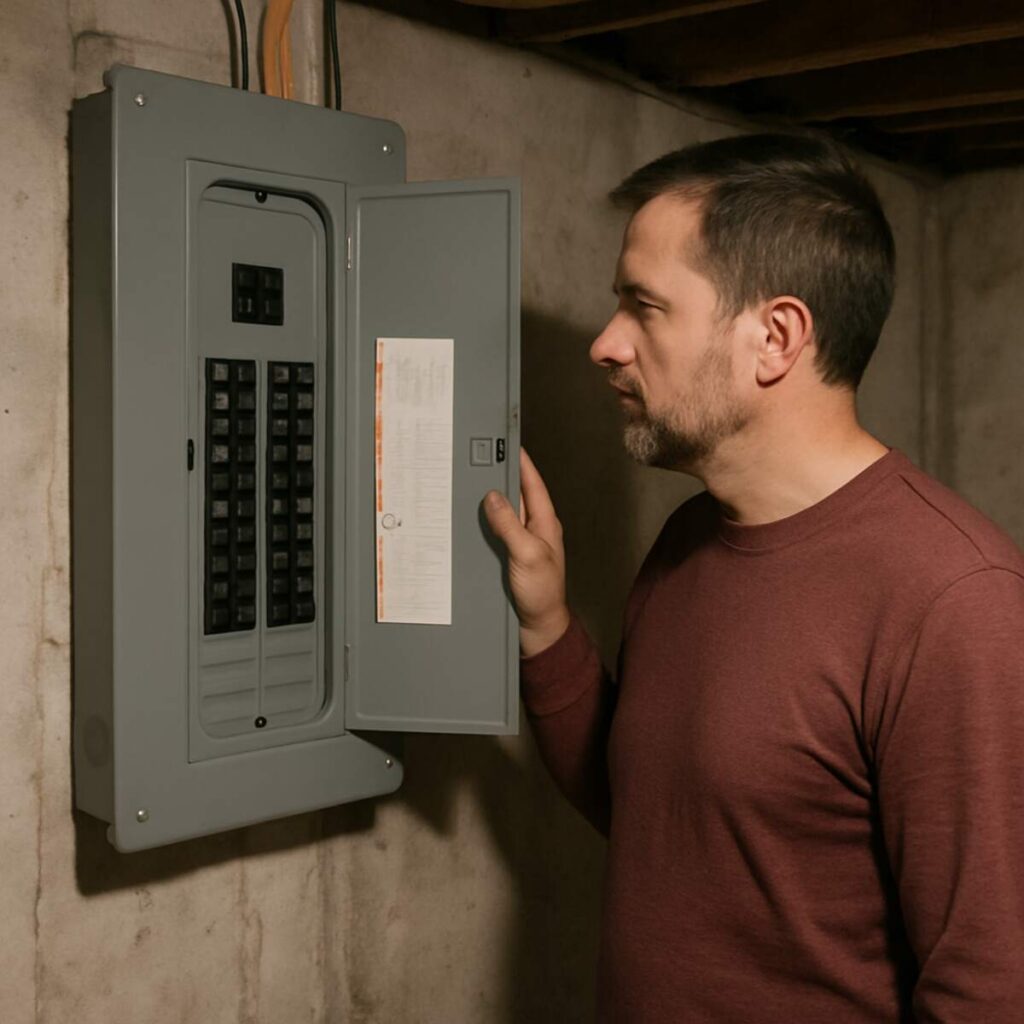
Every time you flip a switch, plug in your laptop, or turn on your air conditioner, you rely on the hidden heartbeat of your home: the electrical panel. Most of us rarely give this gray metal box a second thought until the lights go out. However, expecting a decades-old electrical system to keep up with the demands of modern technology is like expecting a vintage car to win a modern Formula 1 race. Eventually, the system will struggle, and the results can range from minor inconveniences to severe safety hazards. Best way to find the electrician near me.
If you have been noticing strange quirks in your home’s power supply, or if you live in an older home that hasn’t been updated in years, you might be looking at an outdated system. In this comprehensive guide, we will explore the critical signs that indicate you need an electrical panel upgrade, dive into the mechanics of your home’s power system, and provide actionable advice on how to bring your electrical infrastructure into the 21st century.
Whether you are preparing for a major home renovation, buying an electric vehicle, or simply trying to make your home safer, understanding your electrical panel is the first step.
What Exactly is an Electrical Panel?
Before we can discuss upgrading, it is essential to understand what your electrical panel actually does. Also known as a breaker box, distribution board, or service panel, this component is the central distribution point for the electricity entering your home.
Power comes from the utility company, flows through your electrical meter, and goes straight into your electrical panel. From there, the panel divides that massive current into smaller, manageable “branch circuits” that route electricity to different rooms, outlets, and appliances.
Each of these circuits is protected by a circuit breaker (or, in older homes, a fuse). If a circuit attempts to draw more electricity than it can safely handle, the breaker trips, cutting off the power to prevent the wires from overheating and causing a fire.
The Evolution of Home Electrical Systems
Homes built in the mid-20th century were not designed for multiple smart TVs, dual-zone HVAC systems, high-powered gaming PCs, and electric vehicles. Fifty years ago, a 60-amp electrical service was considered adequate. By the 1980s, 100-amp service became the norm. Today, anything less than a 200-amp system is generally considered insufficient for a modern lifestyle.
This evolution is why an electrical panel replacement is one of the most common and vital upgrades homeowners face today. Understanding the difference between old technology and modern safety standards is crucial for protecting your property.
Circuit Breakers vs Fuses: A Generational Shift
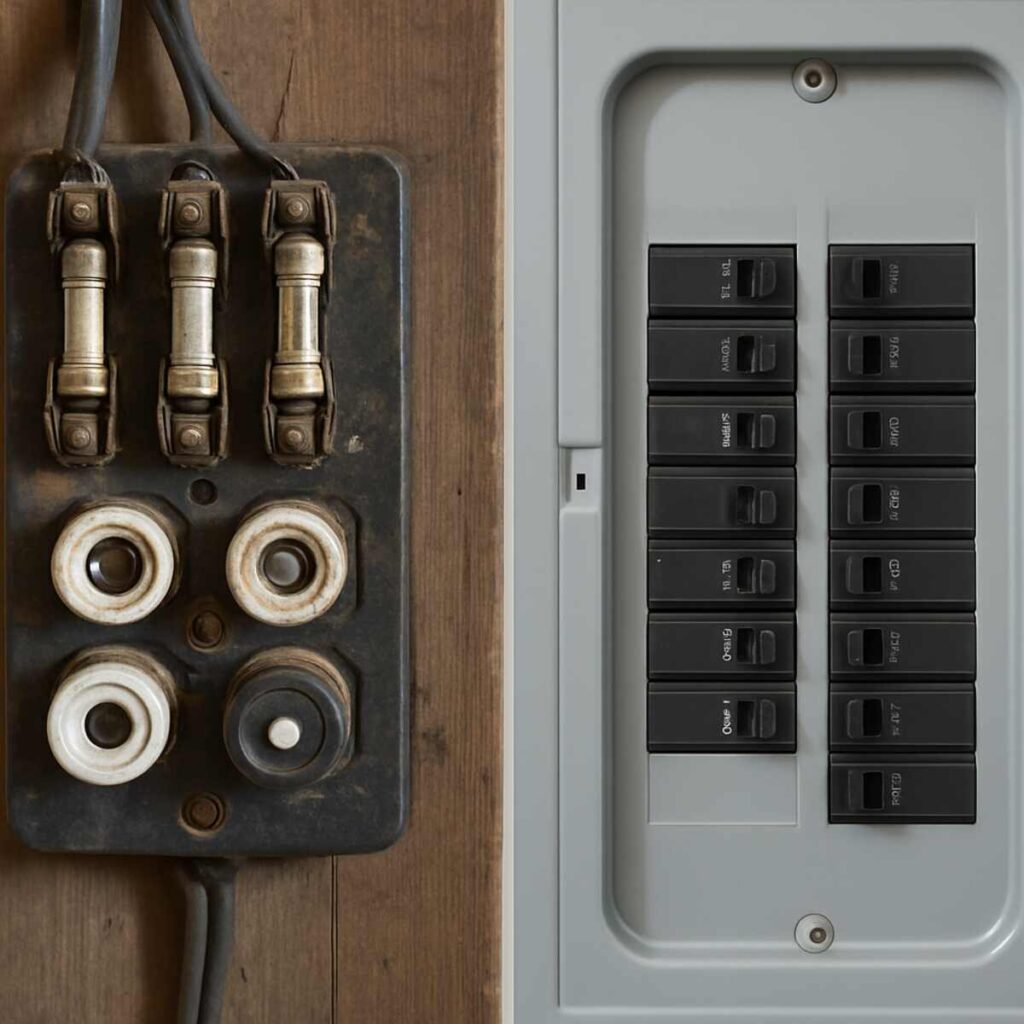
If you live in a historic home or a house built before the 1960s, you might not have a breaker box at all. Instead, you might have a fuse box. Understanding the difference between circuit breakers vs fuses is essential when evaluating your home’s safety.
Fuses and circuit breakers serve the same fundamental purpose: interrupting the flow of electricity during an overload or short circuit. However, they go about it very differently.
- Fuses: These contain a small piece of metal that melts when too much current passes through it. Once a fuse blows, it is destroyed and must be physically replaced.
- Circuit Breakers: These are mechanical switches. When an overload occurs, an internal mechanism trips the switch to the “off” position. To restore power, you simply reset the switch.
Why Replacing Old Fuse Box Systems is Critical
While fuses themselves are theoretically safe if used correctly, fuse boxes are entirely obsolete for several reasons:
- Capacity Limitations: Most fuse boxes were designed for 30 to 60 amps of total power, which is drastically inadequate for modern households.
- The “Penny” Hazard: In the past, frustrated homeowners who ran out of replacement fuses would sometimes place a copper penny behind a blown fuse to restore the connection. This bypassed the safety mechanism entirely, allowing wires to overheat and frequently causing catastrophic house fires.
- Insurance Issues: Many insurance companies will refuse to insure a home with an active fuse box, or they will charge exorbitant premiums.
If your home still operates on fuses, replacing old fuse box systems with a modern breaker panel should be at the absolute top of your maintenance priority list.

10 Undeniable Signs You Need an Electrical Panel Upgrade
How do you know when your panel is on its last legs? Often, the warning signs are subtle at first, gradually becoming more pronounced as the system degrades. Here are the top indicators that it is time to upgrade electrical panel systems in your home.
1. Frequent Circuit Breaker Tripping
A breaker tripping once in a blue moon is normal—it means the safety mechanism is doing its job. However, preventing frequent circuit breaker tripping requires looking at the root cause. If you find yourself repeatedly walking down to the basement or garage to reset a breaker just because you ran the microwave and the toaster at the same time, your panel is screaming for help. This is one of the most obvious signs electrical panel is overloaded and struggling to distribute adequate power.
2. Handling Flickering Lights in House
If your lights dim or flicker when a large appliance (like the refrigerator, air conditioner, or washing machine) kicks on, it is a clear indication that the appliance is drawing more current than the panel can seamlessly supply. Handling flickering lights in house shouldn’t involve just ignoring the problem or buying new lightbulbs; it requires a professional assessment of your home’s overall electrical capacity.
3. Strange Noises Coming from the Panel
Electricity should be silent. If you stand near your electrical panel and hear a distinct buzzing, humming, or crackling sound, you have a serious problem. This noise often indicates a loose connection or a failing breaker that is allowing electrical current to arc between metal components. Arcing generates tremendous heat and is a primary cause of electrical fires.
4. Burning Smells or Scorching Marks
If you ever smell burning plastic or a distinct “fishy” electrical odor near your breaker box, or if you see brown or black scorch marks around the breakers, shut off your main power immediately and call an electrician. This means the insulation around the wires is melting. This is a severe fire hazard that requires immediate emergency intervention.
5. The Panel Feels Warm to the Touch
Your electrical panel should always be at room temperature. If the metal exterior or the breakers themselves feel warm or hot to the touch, the panel is overloaded and failing to manage the heat generated by the electrical current.
6. You Have a Federal Pacific or Zinsco Panel
If your home was built between 1950 and 1990, check the brand name on your panel. Millions of homes were equipped with Federal Pacific Electric (FPE) Stab-Lok panels or Zinsco panels. These specific brands have been proven to have massive design flaws where the breakers fail to trip during an overload. These panels have been responsible for thousands of fires and should be replaced immediately, regardless of whether you are experiencing issues.
7. Reliance on Extension Cords and Power Strips
Take a walk around your house. If every outlet has a power strip plugged into it, and extension cords are running under rugs to power your devices, you lack sufficient wall outlets. The permanent solution isn’t buying more power strips; it is adding new outlets and dedicated appliance circuits, which almost always requires an electrical panel upgrade to handle the additional load.
8. Age of the Panel
Electrical panels do not last forever. The general lifespan of a high-quality breaker box is 25 to 30 years. If your home is older and the panel has never been replaced, the internal components (like the bus bars) may have degraded, rusted, or corroded over time.
9. Upgrading Appliances or Doing Renovations
If you are remodeling your kitchen, adding a hot tub, installing central air conditioning, or building a home addition, you will almost certainly need more power. Modern appliances require significant energy, and a dated panel will not be able to support a major home renovation safely.
10. Presence of Rust and Water Damage
Electricity and water are a deadly combination. If you see rust on your panel box or water stains trickling down the wall beneath it, moisture is getting into your electrical system. This can happen due to a leaky basement, high humidity, or water traveling down the main service cable from the outside. Rust compromises the metal connections, leading to high resistance and overheating.
The Catalyst for Change: Modern Power Demands
To truly understand why an electrical panel replacement is so common today, we must look at how our power demands have skyrocketed over the last few decades.
Consider the average home in 1985. It likely had one or two box televisions, a basic refrigerator, an electric stove, standard incandescent lighting, and a few small appliances.
Now, consider the modern home. The typical household runs:
- Multiple large smart TVs and gaming consoles
- Desktop computers and home office equipment
- Smart refrigerators and high-efficiency washer/dryer sets
- Central air conditioning or multiple mini-split HVAC units
- Smart home hubs, security cameras, and automated lighting
- High-draw kitchen gadgets like air fryers, induction cooktops, and espresso machines
All of these devices require stable, continuous electricity. But there is one modern addition that drains more power than all of these combined: the electric vehicle.
Electric Vehicle Charger Power Requirements
As the world transitions to sustainable transportation, more homeowners are purchasing electric vehicles (EVs). However, many are shocked to find out that their existing home electrical system cannot support a home charging station.
Electric vehicle charger power requirements are immense. A Level 1 charger (which plugs into a standard 120-volt outlet) is slow, often taking over 24 hours to charge a car. Most EV owners want a Level 2 charger, which requires a 240-volt dedicated circuit.
Depending on the charger, it can draw anywhere from 30 to 60 amps on its own. If you have a 100-amp electrical panel, adding a 50-amp EV charger means your car is consuming half of your home’s total available electricity. If your air conditioner and electric oven kick on while the car is charging, the main breaker will trip, plunging your home into darkness.
Upgrading your electrical panel is the only safe, reliable way to accommodate a Level 2 EV charger.
Dedicated Appliance Circuits: Why They Matter
When planning a panel upgrade, electricians will often discuss the need for “dedicated circuits.” But what exactly does this mean?
A dedicated appliance circuit is an electrical circuit that serves only one specific appliance. The National Electrical Code (NEC) requires dedicated circuits for heavy-duty appliances to ensure that they get the uninterrupted power they need without overloading the system.
Common appliances that require dedicated appliance circuits include:
- Refrigerators and freezers
- Electric ranges and ovens
- Microwaves
- Dishwashers
- Garbage disposals
- Washers and dryers
- HVAC systems and water heaters
- Sump pumps
- Hot tubs and pools
If your current panel is full—meaning there are no physical slots left to add new breakers—you cannot add a new dedicated circuit for your new kitchen remodel or basement finishing project without increasing home electrical capacity through a panel upgrade.
Deep Dive: The 200 Amp Service Installation
When you speak to an electrician about upgrading, the phrase you will hear most often is “200-amp service.” What does this mean, and why is it the gold standard?
The “amperage” or “amps” refers to the volume of electrical current that can flow into your home simultaneously.
- 60 Amps: Obsolete. Found only in very old homes without central AC or modern appliances.
- 100 Amps: The minimum code requirement for a home today, but practically insufficient for a modern, tech-heavy family home.
- 150 Amps: A middle ground, often found in smaller townhomes with gas appliances (rather than electric).
- 200 Amps: The current standard for residential homes. It provides enough capacity for central AC, electric appliances, home offices, and an EV charger.
- 400 Amps: Increasingly common in very large luxury homes (over 4,000 square feet) with extensive amenities like heated swimming pools, multiple EV chargers, and extensive exterior lighting.
A 200 amp service installation is the most common upgrade path. It ensures you have plenty of overhead for future additions. However, this upgrade is not as simple as just swapping the box on the wall.
When increasing home electrical capacity to 200 amps, the utility company must verify that the lines running from the street to your house can carry 200 amps. Furthermore, the meter base on the outside of your house and the main service wire connecting the meter to your indoor panel must also be upgraded to handle the increased load safely.
Improving Home Fire Safety and NEC Compliance
One of the most compelling reasons to commit to an electrical panel upgrade is improving home fire safety. According to the National Fire Protection Association (NFPA), electrical failures or malfunctions are the second leading cause of U.S. home fires, accounting for tens of thousands of fires and hundreds of millions of dollars in property damage every year.
Older panels were simply not built to current safety standards. Over the years, the National Electrical Code (NEC)—the benchmark for safe electrical design, installation, and inspection to protect people and property from electrical hazards—has evolved significantly.
Modern panel upgrades ensure strict National Electrical Code compliance. Two of the most important life-saving technologies mandated by modern NEC standards are AFCI and GFCI breakers.
Arc-Fault Circuit Interrupters (AFCI)
An arc fault occurs when electricity jumps (or arcs) across loose connections or damaged wires. This creates intense heat that can quickly ignite surrounding wood framing or insulation. Old breakers only trip during massive power overloads, but they often ignore the small, erratic current fluctuations caused by arcing. Modern AFCI breakers are essentially tiny computers that constantly monitor the electrical waveform. If they detect the specific signature of an dangerous arc, they shut the circuit down instantly.
Ground-Fault Circuit Interrupters (GFCI)
You are likely familiar with GFCI outlets—the ones with the “Test” and “Reset” buttons found in kitchens and bathrooms. They protect against electric shock if water gets into an appliance. Today, modern panels can incorporate GFCI protection directly into the breaker itself, providing whole-circuit protection against fatal shocks.
By upgrading your panel, you ensure that your home’s “nervous system” is equipped with the latest, code-compliant, life-saving technology.
The Future is Here: Smart Electrical Panels vs Traditional
If you are going to invest in a panel replacement, you now have a choice that didn’t exist a decade ago: should you buy a traditional panel or a smart panel?
Traditional Electrical Panels
A traditional panel is completely mechanical. It does its job quietly and reliably. If a breaker trips, you walk over, open the door, and manually flip it back. You have no real-time data on how much power your home is using or which appliances are drawing the most energy.
Smart Electrical Panels
The debate of smart electrical panels vs traditional panels is becoming highly relevant for energy-conscious homeowners. Brands like SPAN, Leviton, and Lumin are revolutionizing the industry by turning the humble breaker box into an intelligent home energy management system.
Here is what a smart panel can do:
- App Control: You can monitor and control every circuit in your home from an app on your smartphone. Did you forget to turn off the oven before leaving for vacation? Turn off the kitchen circuit from your phone.
- Energy Monitoring: Smart panels provide granular, real-time data on your energy usage. You can see exactly how much electricity your HVAC system uses compared to your water heater, helping you identify energy hogs and lower your utility bills.
- Solar and Battery Integration: If you have solar panels or a home battery system (like a Tesla Powerwall), a smart panel manages where that stored energy goes during a power outage. You can easily program the panel to shut off non-essential circuits (like the basement TV) to ensure your battery lasts long enough to keep your refrigerator running.
- Predictive Maintenance: Smart panels can alert you if an appliance starts drawing unusual amounts of electricity, which is often an early warning sign that an appliance motor is failing.
While smart panels have a higher upfront cost, their ability to seamlessly integrate with renewable energy and provide total control makes them a brilliant investment for modern, high-tech homes.
The Financial Picture: Cost of New Breaker Box Installation
When considering an upgrade, the inevitable question is: how much will this cost? The cost of new breaker box installations can vary widely based on your location, the complexity of the job, and the condition of your home’s current wiring.
Generally speaking, you can expect the following cost breakdown:
- Basic Panel Swap (100 amp to 100 amp): If you are just replacing an old, unsafe box but not increasing capacity, costs typically range from $1,500 to $2,500.
- 200 Amp Service Upgrade: If you are increasing home electrical capacity to 200 amps (which includes replacing the meter base, the weatherhead, and running new service entrance cables), expect to pay between $2,500 and $4,500.
- Smart Panel Upgrade: Installing a high-end smart panel will push the cost higher, usually ranging between $4,000 and $7,000 due to the advanced technology of the hardware itself.
- Extensive Rewiring: If your home still has ancient knob-and-tube wiring or aluminum wiring, the electrician will likely need to rewire significant portions of the house. This can quickly push total project costs over the $10,000 mark.
Return on Investment (ROI) and Hidden Savings
While an electrical panel replacement is a significant upfront expense, it offers excellent hidden returns.
- Lower Insurance Premiums: Updating from a fuse box or an FPE panel can significantly lower your homeowner’s insurance premiums.
- Increased Property Value: Homebuyers are increasingly savvy. A brand-new 200-amp or smart electrical panel is a massive selling feature that increases your home’s resale value.
- Appliance Protection: A stable power supply prevents the micro-surges that slowly destroy the sensitive electronic circuit boards in modern appliances, saving you money on early replacement costs.
The Right Way to Upgrade: Hiring and Permitting
This is the most crucial piece of advice in this entire guide: Do not attempt to upgrade your electrical panel yourself.
Electricity is unforgiving. A single mistake can result in fatal electrocution or burn your house to the ground. Upgrading a panel is not a DIY weekend project for enthusiastic amateurs. It requires the specialized knowledge, tools, and protective gear of an expert.
Hiring a Licensed Master Electrician
When you search for a professional, you should specifically focus on hiring a licensed master electrician, or an electrical contractor who employs them. A master electrician has thousands of hours of on-the-job experience, has passed rigorous state examinations, and intimately understands the complex calculations required to balance electrical loads safely.
When vetting an electrician:
- Ask for their license number and verify it with your state or local licensing board.
- Confirm they are fully insured, carrying both liability and workers’ compensation insurance.
- Ask for references and check online reviews.
- Get at least three detailed, written estimates to compare scope of work and pricing.
Obtaining Electrical Permits for Renovations
A reputable electrician will insist on pulling the proper permits. Obtaining electrical permits for renovations is a legal requirement in nearly all municipalities.
Why are permits so important?
- Safety Oversight: The permit ensures that a neutral third party (the city or county electrical inspector) will review the electrician’s work to confirm it meets strict safety codes.
- Home Insurance: If a fire starts in your home due to unpermitted electrical work, your insurance company is legally within their rights to deny your claim, leaving you financially ruined.
- Future Resale: When you go to sell your house, buyers and home inspectors will ask to see the permits for any major upgrades. Unpermitted work can derail a home sale and force you to pay for expensive retroactive inspections.
Never hire a contractor who suggests doing the work “under the table” without permits to save a few bucks. It is not worth the risk.
Step-by-Step: What to Expect on Installation Day
If you have recognized the signs, hired a pro, and secured your permits, you might be wondering what actually happens on the day of your electrical panel upgrade. Here is a general timeline of the process to set your mind at ease.
Step 1: The Utility Shutoff Because the main lines coming from the street are always “live,” your electrician will coordinate with your local utility company to disconnect power to your home temporarily. Your house will be without electricity for the duration of the project, which usually takes between 4 to 8 hours.
Step 2: Removal of the Old Equipment The electrician will carefully detach all the existing branch circuit wires, remove the old breakers, and take the old metal box off the wall. If you are getting a service upgrade, they will also remove the old meter box outside.
Step 3: Installing the New Infrastructure The new, larger panel box is mounted to the wall. The new outdoor meter base is installed, and thick new service entrance cables are run to connect the meter to the panel.
Step 4: Wiring and Grounding This is the meticulous part. The electrician will connect the main power lines to the main breaker. Then, they will carefully install each individual circuit breaker, attaching the corresponding wires. They will also ensure the system is properly grounded—usually by driving a long copper rod into the earth outside and connecting it to the panel—which provides a safe path for rogue electricity (like a lightning strike) to dissipate into the ground.
Step 5: Labeling A good electrician leaves a highly organized panel. Every breaker will be clearly labeled on the panel door (e.g., “Kitchen Outlets,” “Master Bedroom Lighting,” “HVAC”).
Step 6: Inspection and Reconnection Once the work is done, the local electrical inspector will arrive to review the installation. Once they sign off, the utility company will return to reconnect the power to your home.
Maintenance: Keeping Your New Panel Healthy
Once your new electrical panel is installed, your home’s electrical capacity and safety are secured for decades. However, a little preventative maintenance goes a long way.
- Keep the area clear: The NEC requires a minimum of 36 inches of clear space in front of the panel and 30 inches of width. Do not stack boxes, store furniture, or build shelving that blocks access to the panel. In an emergency, you need to reach it instantly.
- Test your breakers: Once or twice a year, it is a good habit to turn your breakers off and back on again. This exercises the internal mechanical springs and ensures they don’t seize up over time.
- Test AFCI and GFCI breakers: Press the small “Test” button on these specialized breakers monthly. It should trip instantly. If it doesn’t, the safety mechanism has failed and the breaker must be replaced.
- Annual Visual Inspection: Open the metal door once a year and look for any signs of moisture, rust, or pests (like mice or spiders) making a home inside the box. Never remove the inner metal cover (the “dead front”) that exposes the actual wires; leave that to the professionals.
Frequently Asked Questions
To round out your knowledge, let’s address some of the most common questions homeowners have about electrical panel replacement and capacity upgrades.
Can I just add a sub-panel instead of replacing my main panel?
Sometimes. If your main panel has plenty of total capacity (amps) but you have simply run out of physical slots for new breakers, an electrician can install a smaller “sub-panel” next to it to create more slots. However, if your main panel is maxed out on overall capacity (e.g., a 100-amp panel that is already struggling), adding a sub-panel will not solve the problem. You need a total upgrade to increase your home electrical capacity.
How long does an electrical panel upgrade take?
The physical work typically takes a single day, usually between 4 and 8 hours. However, the entire process—including getting estimates, securing permits, and coordinating with the utility company—can take several weeks of planning.
Does my power have to be turned off?
Yes. For the safety of the electricians, power to your entire home will be disconnected at the utility level during the installation. You will need to plan accordingly for your refrigerator, internet, and HVAC.
Can a new panel save me money on my electric bill?
A traditional panel won’t lower your usage, but it makes your home run more efficiently and safely. However, if you upgrade to a smart panel, the energy monitoring features can help you identify wasteful habits and power-hungry appliances, which can indirectly lead to significant savings on your utility bills over time.
Conclusion: Empowering Your Home for the Future
Your electrical panel is the literal command center of your home. As we usher in an era of smart technology, high-end appliances, electric vehicles, and increased reliance on home electronics, expecting an outdated panel to keep up is a recipe for frustration and danger.
Recognizing the warning signs—whether it is handling flickering lights in house, preventing frequent circuit breaker tripping, or noticing scorching and rust—is the first crucial step in proactive home maintenance. Ignoring these signs can lead to catastrophic electrical failures, property damage, or devastating home fires.
By investing in an electrical panel upgrade, you are not just buying a metal box with switches. You are investing in peace of mind. You are ensuring National Electrical Code compliance, improving home fire safety, and preparing your property for future advancements.
Whether you choose a standard 200 amp service installation to meet your current needs or embrace the future with a smart panel, remember that this is one project where quality and expertise matter above all else. Take the time to consult with a licensed master electrician, secure the proper permits, and give your home the robust, reliable heartbeat it deserves.