


Have you ever walked into a room, only to completely forget why you are there the second you cross the threshold? That momentary blankness isn’t a personal failing or a sign of a declining memory. Cognitive psychologists suggest treating these common hiccups as a temporary glitch in your background code. Just like a smartphone buffering when too many apps run at once, your mental processor occasionally drops a task. Get the Best information about slot online.
We happily spend hundreds to upgrade our smart devices, yet we rarely think to install a software update for the mental operating system inside our heads. According to neuroplasticity research, your brain remains highly adaptable throughout your life, constantly rewiring itself in response to your daily habits. Your current way of thinking is just the latest version of your internal software. You actually possess the power to write better, faster instructions for how you focus and learn.
Playing a targeted brain code game acts as a direct patch for those frustrating mental glitches. By presenting you with simple, repeatable logic puzzles, these activities teach your mind to organize information more efficiently. Rather than treating intelligence like a mysterious black box, improving cognitive problem solving becomes as straightforward as downloading a system update. Every time you solve a level, you essentially rewrite the recipes your mind relies on.
Ready to start clearing out the digital cobwebs? Engaging with a modern brain training game doesn’t require coding knowledge; it simply takes a willingness to play. As we explore the hidden rules governing your thoughts, you will discover exactly how a few minutes of daily play can transform your mental clarity.
The Secret Language of Your Mind: Why ‘Coding’ Your Thoughts Boosts Creativity
We constantly upgrade our smartphones, yet we rarely consider updating the operating system driving our own creativity. Many people assume inventive thinking is a mysterious, inborn gift. In reality, your mind simply runs a background algorithm that sorts through past experiences to generate fresh ideas. When you feel stuck on a problem, it is never a lack of talent; your mental software just needs a patch to connect those isolated thoughts.
This mental patching relies on neuroplasticity—your mind’s incredible ability to rewire its own hardware. Think of this through a “Tech-to-Tendon” connection: just as typing a new line of code permanently changes an app, practicing a new logical thought physically alters the cellular structure of your brain. It feels exactly like building muscle memory. Every time you solve a novel problem, you lay down fresh internal fiber-optic cables that make your next mental hurdle feel effortless.
Upgraded mental cables turn unpredictable “inspiration” into a highly reliable, daily process. True creativity is simply efficient pattern matching across your internal database. For instance, building sharp pattern recognition skills for gamers effortlessly translates into real-world wins, like instantly spotting a faster commute route or organizing a chaotic schedule. You aren’t summoning magic; you are rapidly compiling familiar data into a brand-new recipe.
Putting this theory into practice requires targeted mental resistance, which is exactly where a well-designed brain training game comes in. Testing your internal algorithms provides the immediate feedback needed to strengthen those physical neural bridges, demonstrating exactly why traditional puzzles fail and how modern logic mechanics are different.
Why Traditional Puzzles Fail—And How ‘Brain Code’ Mechanics Are Different
Most of us grew up believing Sudoku was the ultimate mental workout. While classic activities test memory, they act like a search engine pulling old files rather than software building new skills. They rely on simple recall instead of systemic thinking. A modern brain code game, however, demands that you understand an entire system rather than find a single correct answer.
Mastering this hidden machinery relies on the “logic loop”—a simple mental recipe like, “If X happens, do Y.” When comparing static memory puzzles to dynamic code-breaking challenges, the power of mobile brain teaser mechanics becomes obvious:
- Focus: Traditional puzzles ask “What is the answer?” while code games ask “How does this work?”
- Reaction: Static grids sit quietly; dynamic games immediately shift based on your choices.
- Application: Trivia stays isolated, but systemic logic applies directly to real-world problems.
- Growth: Old puzzles require knowing facts; modern systems train you to think faster.
Actively engaging with these loops physically strengthens your mental wiring. Because dynamic puzzles provide instant feedback, using tools like interactive logic game hints when you stall helps your mind quickly adjust and lock in new strategies. You stop memorizing isolated data and start engineering solutions.
Mastering Cryptic Riddles: 3 Techniques to Break Through Mental Blocks
Staring at a puzzle until your thought process stalls is a common frustration. Learning how to solve cryptic riddles isn’t about raw intelligence; it’s about optimizing your mental search engine. Instead of processing the entire trick at once, find the “hidden subject” first. Think of this as typing the main keyword into Google. If a riddle asks what has keys but no locks, your brain shouldn’t search for doors. It should tag “keys” and associate them with unexpected objects, instantly pulling up a piano.
Once you isolate that subject, apply a tool called “Variable Substitution” to decode the rest. Imagine reading a recipe where one ingredient is smudged. You don’t throw away the instructions; you just use a placeholder—like “insert liquid”—until the steps make sense. In a brain teaser game, you do exactly this. Temporarily swap confusing phrases with a simple placeholder. This prevents mental overload and lets the surrounding context naturally reveal the logical answer.
Mastering these memory tags does more than win points; it is a proven method for improving cognitive problem solving everyday. When you stop freezing at overwhelming information and start substituting logical placeholders, real-world challenges become highly manageable. Reducing a scenario to simple components effectively prepares you to process fundamental logical rules.
The Binary Advantage: How Decoding 0s and 1s Sharpens Logical Reasoning
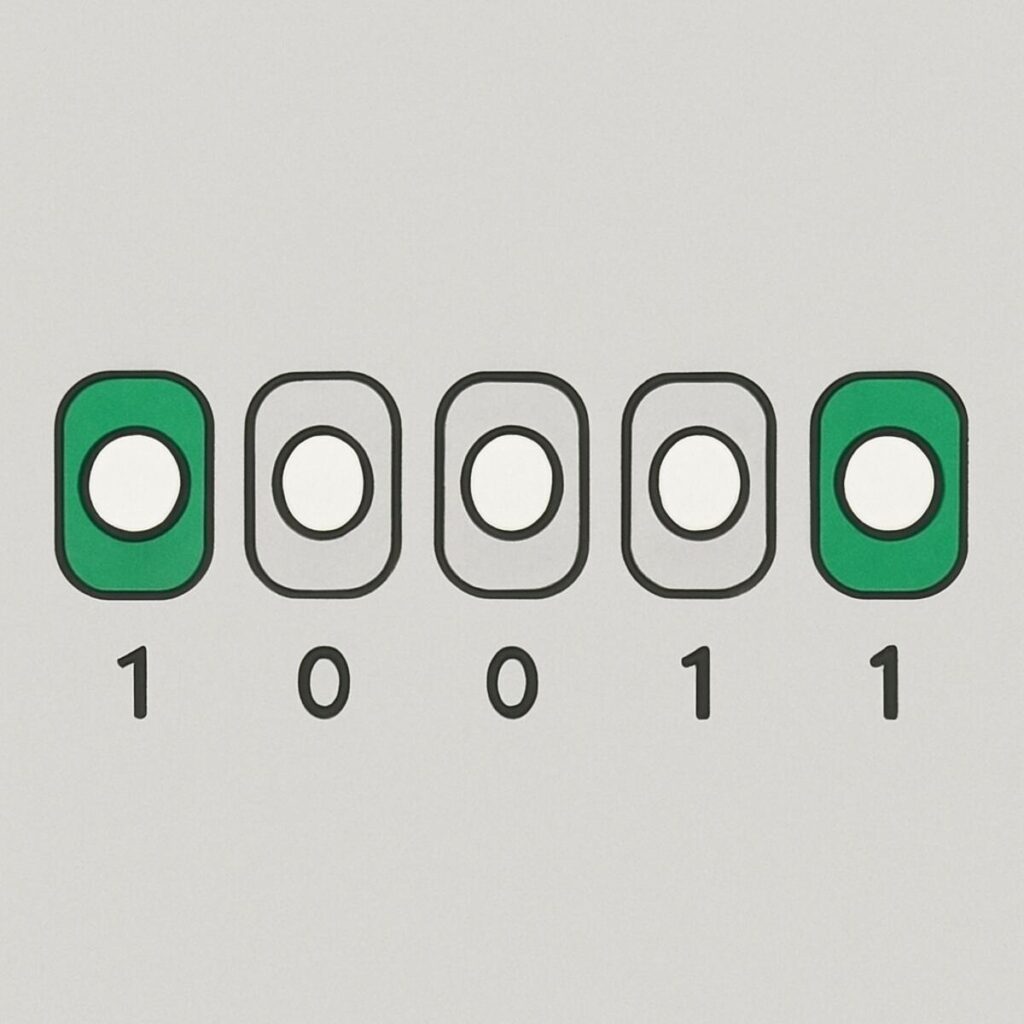
We spend hours agonizing over complicated choices, but simplifying any problem into a series of toggle switches offers immense clarity. That is the core of binary, the foundational “brain code” behind every digital device and many solutions to logical reasoning challenges. Instead of juggling a dozen possibilities at once, binary logic—or Base-2 thinking—strips everything down to a simple Yes or No, On or Off. It is the ultimate antidote to daily decision fatigue.
Imagine looking at a basic row of light switches in your house. Decoding binary and hexadecimal clues often starts right here, with the understanding that each switch represents a doubling of the previous value: 1, 2, 4, 8, and 16. If a switch is “On” (a 1), you count it; if it is “Off” (a 0), you ignore it. By simply adding the “On” switches together, a seemingly robotic string of 0s and 1s transforms into simple numbers and clear instructions, proving that highly complex systems are just small, manageable rules stacked together.
Training your mind to spot these underlying patterns dramatically accelerates your everyday processing speed. When you filter out noise and isolate the core “On/Off” choices, you naturally rewire your brain to handle complex variables without feeling overwhelmed.

Cracking Hexadecimal Clues: A Beginner’s Guide to Multi-Base Thinking
Binary numbers quickly become overwhelmingly long when dealing with complex data. While reading 0s and 1s works perfectly for simple choices, advanced mental tasks need a shortcut. Enter hexadecimal, or Base-16. Imagine if you suddenly had 16 digital fingers to count with. Since our normal numbers only go from 0 to 9, this system borrows the letters A through F to represent 10 through 15. Mastering this shorthand is the secret to quickly decoding binary and hexadecimal clues, acting like a mental zip file that compresses vast amounts of information.
Shifting out of your comfortable counting habits builds incredible mental flexibility. Practicing this trains your mind to hold multiple rulesets simultaneously—a crucial step for understanding abstract game logic. Let’s translate a basic hex code like “1A” into a regular number:
- Look at the right digit (‘A’). In our 16-finger system, ‘A’ always stands for 10.
- Look at the left digit (‘1’). In Base-16, this second column counts groups of 16, so we have one 16.
- Add them together: 16 plus 10 equals 26.
Playing with multi-base numbers teaches your brain not to freeze when the rules change. You start seeing unfamiliar symbols as clever shortcuts rather than roadblocks, building the perspective needed to solve puzzles from unconventional angles.
Lateral Thinking Walkthroughs: Solving the ‘Impossible’ Puzzle by Changing Your POV
Staring at a puzzle until your brain feels completely stuck in a rut is incredibly frustrating. This linear thinking is like banging on a locked front door while entirely missing the open side window. Finding that alternate entry is the core of lateral thinking puzzle walkthroughs. To get there, you must treat your mind like an overgrown backyard. Before planting the seeds for a creative breakthrough, you must do some mental garden maintenance by weeding out the obvious, incorrect assumptions that are crowding your thoughts.
The perfect tool for clearing those mental weeds is the Inversion Technique. Instead of asking how to win a specific brain teaser game, you ask yourself what steps would guarantee complete failure. Looking at the objective backward forces your brain’s software out of its predictable loops, exposing hidden rules you might have missed. This simple cognitive reset easily turns impossible roadblocks into manageable stepping stones.
When you master this backward approach, it completely alters how you process daily confusion. Once you understand how to solve cryptic riddles by setting aside the most obvious distractions, your mind stops freezing up at scrambled data. You begin to trust your ability to spot hidden patterns where others see only chaos.
Morse Code and Cipher Puzzles: Turning Static into Meaningful Information
Struggling to hear a friend talking in a crowded, noisy restaurant perfectly illustrates the mental strain of “signal-to-noise detection.” Playing cipher and morse code puzzles trains this exact cognitive software. By forcing your mind to tune out visual or auditory static to find a hidden rhythm—such as a predictable series of dots and dashes—you directly improve your ability to focus in chaotic, high-stress environments.
Unlocking these challenges isn’t about being a math genius; it simply requires following a recipe for step by step riddle decryption. The foundational tool for this is “letter shifting,” where the standard alphabet is rearranged to hide a clear message. You can easily spot these hidden rules by checking for three common variations:
- Caesar Cipher: Shifts every letter a set number of spaces down the line (for example, A becomes D).
- Atbash Cipher: Reverses the alphabet entirely, folding it like a mirror so A becomes Z and B becomes Y.
- Vigenère Cipher: Uses a repeating keyword to shift letters by varying amounts, creating a dynamic lock.
Once you experience that satisfying “click” of clarity, you prove to yourself that meaning can be pulled from absolute gibberish. As you practice tuning into these specific rhythms, you confidently recognize the noise and filter it out.
Pattern Recognition: How to Spot the ‘Glitch’ Before It Happens
Driving to work and realizing you don’t remember the actual commute is a mental feature driven by predictive coding. Because your brain uses enormous amounts of energy, it searches for predictable sequences—like your familiar morning route—to stop actively processing and save power. It essentially writes a shortcut script, assuming that if A and B happen, C will naturally follow.
Brain code games intentionally mess with these comfortable shortcuts to keep your mind sharp. When a logic puzzle suddenly shifts its own rules, you experience a sequence break. If a puzzle establishes a red-blue-red rhythm and suddenly introduces a yellow shape, your brain snaps out of autopilot to process the anomaly. Developing these pattern recognition skills for gamers isn’t just about scoring points; it teaches your mind to adapt quickly when the expected recipe suddenly fails.
Sharpening this ability translates directly into improving cognitive problem solving at your everyday job. Training yourself to spot the exact moment a sequence breaks in a game makes you significantly faster at catching an error in a spreadsheet or noticing a client’s shifting tone in an email. Stripping away excess visual noise makes spotting these crucial glitches even easier.
Minimalist Game Design: Why Fewer Visuals Lead to More Mental Focus
Downloading a mobile game only to be bombarded with flashing rewards, chaotic timers, and vibrating animations is unfortunately common. While these flashy distractions trigger an immediate dopamine rush, they sabotage mental growth by maxing out your “Cognitive Load.” Think of your brain’s processing power like carrying groceries; if your arms are full of brightly colored junk food representing visual clutter, you will inevitably drop the healthy ingredients. When an app throws excessive noise at you, your mental software wastes energy sorting the screen instead of actually solving the problem.
Stripping away this digital clutter is why effective logic tools rely on minimalist puzzle design features. Presenting simple shapes against a quiet background helps you achieve “Deep Focus”—a highly productive state in which your mind dedicates all its resources to rewriting mental recipes. Without the distraction of exploding candy, you engage directly with raw logic, turning mindless screen tapping into a genuine cognitive workout.
Chasing that quiet “Aha!” moment instead of a flashing banner builds lasting clarity. A clean interface acts like an organized desk, giving your brain the breathing room needed to upgrade its daily reasoning skills. To truly maximize this undistracted environment, many players choose to disconnect entirely and utilize offline options.
Offline Brain Training: The Best Apps for Cognitive Growth Without Wi-Fi
Imagine reading a book while someone constantly taps your shoulder. That is exactly what happens to your focus when an app connects to the internet to load background ads or notifications. The “Offline Advantage” is the mental equivalent of locking your office door. By disconnecting from Wi-Fi, you eliminate digital interruptions, allowing your internal software to run without buffering. You engage fully with raw mobile brain-teaser mechanics instead of wasting energy on dismissing pop-ups.
Finding the right digital playground depends on your comfort level with these new logic recipes. Here are three excellent offline puzzle apps to upgrade your skills:
- Blue (Beginner): Focuses on basic cause-and-effect loops. Your goal is simply to turn the screen blue, making it perfect for warming up your problem-solving engine.
- Black (Intermediate): Introduces tougher mental patterns. You must think outside the box to clear visual obstacles, training your brain to search for creative, multi-step solutions.
- Brain Code (Expert): A true brain code game requiring typed text commands. It bridges the gap between simple puzzles and real, satisfying programming logic.
Taking these challenges on the go guarantees unbroken concentration, whether you are commuting or waiting in line. Every uninterrupted victory securely updates your internal operating system, laying the groundwork for genuine neuroplasticity.
The ‘Garden Maintenance’ of the Mind: Using Games for Neuroplasticity
Think of your brain as a dense, constantly shifting backyard garden. To grow the beautiful flowers of new skills, your mind has to regularly pull the weeds of unused habits—a natural cleanup process called synaptic pruning. If you stop doing math on paper, the brain prunes those pathways to save energy, reallocating resources to the apps and shortcuts you use daily. A dedicated brain-training game serves as your set of premium gardening tools, helping you deliberately shape which mental pathways stay healthy and which fade away.
Hitting a mental wall during a puzzle is not a sign of failure; it is actually a biological growth signal. When you encounter a challenge that introduces friction, that resistance tells your internal operating system to reinforce those neural connections. By consistently pushing through these moments of discomfort, you are actively improving cognitive problem solving. Just like lifting a heavier weight tears muscle fibers to build them back stronger, wrestling with complex logic commands forces your brain to sprout fresh, robust neural branches.
Maintaining this landscape over decades requires a commitment to lifelong mental fitness rather than just casual play. Honing pattern-recognition skills for gamers translates directly into real-world sharpness, helping you adapt intuitively when rules shift unexpectedly.
Abstract Logic: How to Play When the Rules Keep Changing
Opening a sleek new app only to realize there is no instruction manual instantly triggers frustration. This initial spike of anxiety is your brain fighting ambiguity, desperately searching for a familiar menu. In advanced brain code games, the rules frequently change without warning, forcing you to cultivate tolerance for ambiguity. Instead of freezing when the old logic fails, understanding abstract game logic requires you to treat the unknown not as a threat, but as a blank canvas for small-scale experimentation. You press a button, observe what happens, and adapt.
To map out these invisible boundaries, use the “Rule of Three” for pattern recognition. Think of it like tuning a guitar: the first attempt sets a baseline, the second checks for a reaction, and the third confirms the pattern. If tapping a blue square turns a screen red once, it might be a fluke; if it happens three times, you have discovered a new rule. By running these tiny, low-stakes experiments, you rewrite your internal software to decode complex environments through observation.
Mastering this trial-and-error rhythm ultimately transforms how you handle daily uncertainties, from navigating sudden road detours to troubleshooting broken appliances. Your mind learns to quickly uncover solutions to logical reasoning challenges based entirely on context clues.
Step-by-Step Decryption: A Systematic Approach to Hard Riddles
A massive influx of complicated information can cause the mind to simply shut down. That overwhelm happens when your brain tries to process too much data at once. To fix this, use a strategy called “Divide and Conquer.” Instead of trying to swallow a massive problem whole, break it into bite-sized pieces. When figuring out how to solve cryptic riddles, focusing on just one strange word prevents your cognitive engine from stalling, turning a giant wall of confusion into manageable stepping stones.
Once you chop the problem down to size, it is time to run a mental debugging routine. Think of this recipe for step by step riddle decryption as a reliable way to get your thoughts unstuck. Whenever you hit a wall in a brain teaser game, follow this practical checklist:
- Isolate: Pick one single clue or symbol to focus on.
- Identify: Determine what this specific piece asks (like a wordplay or a math sequence).
- Test: Guess a logical answer for just that part.
- Adjust: If it fails, tweak your initial assumption.
- Verify: Plug it back into the bigger picture to see if it clicks.
Systematically hunting down answers removes the panic of feeling lost. By treating your mind like a diagnostic tool, you replace sheer guessing with confident logic.
Improving Focus in a Distracted World: The Role of Mobile Logic Mechanics
Hitting a mid-afternoon slump naturally triggers the urge to grab your phone and zone out. The desire to disconnect is entirely normal, but how you spend that break dictates your recovery. Psychologists point to Attention Restoration Theory—the idea that your brain needs a specific type of engaging rest to regain focus. Rather than fully shutting off, using mobile brain-teaser mechanics serves as a mental palate cleanser, shifting your mind away from stressful work loops.
The trap most of us fall into is passive engagement, like endlessly scrolling through social media. This habit further drains your mental battery, leaving you feeling foggy. Switching to a short brain training game flips you into active engagement. These small, intense logic bursts require just enough effort to block out real-world distractions while actively improving cognitive problem solving. It is the difference between slouching on the couch and doing a quick, energizing mental stretch.
Just five to ten minutes of this deliberate exercise effectively reboots your attention span. Sweeping away the background noise naturally sets the stage for those incredibly satisfying moments of sudden clarity.
The Chemistry of the ‘Click’: What Happens in Your Brain During a Breakthrough
Think back to when a confusing problem suddenly dissolved into a clear answer. That incredibly satisfying “click” in your head isn’t just relief; it is a physical event called mental synchronization. In this moment, the scattered fragments of your thoughts align like a perfectly formatted spreadsheet, allowing your internal operating system to run without errors. Playing a structured brain code game deliberately triggers this alignment, turning abstract confusion into a tangible feeling of clarity.
The rush you experience after that click is a targeted hit of dopamine. While often associated with mindless app scrolling, your brain actually uses this chemical as a save button for beneficial habits. Beating a tough level triggers dopamine-logic reinforcement. Your mind rewards you for figuring out the pattern, essentially programming you to crave mental challenges. This internal reward system is the secret sauce for improving cognitive problem solving, naturally motivating you to tackle harder tasks instead of immediately giving up.
To truly harvest this chemical reward, you must allow yourself to struggle just a little bit. Leaning too heavily on interactive logic game hints short-circuits the process and steals your dopamine payoff. Pushing through the initial frustration trains your brain to genuinely enjoy the work of thinking.
Alternative Games for Logic Fans: Beyond Sudoku and Crosswords
If you have mastered the daily crossword or filled your smartphone with standard puzzles, it might be time to install a heavier software update for your mind. While traditional puzzles are great, a true brain code game pushes you to learn an entirely new set of rules—a process called symbolic logic. This means you are learning the fundamentals of computer programming, such as simple cause-and-effect, without ever having to type confusing technical syntax.
Expanding your library to PC and console platforms reveals brilliant alternative games for logic fans that naturally teach these underlying systems. Consider adding these powerful mental workouts to your routine:
- Baba Is You: You physically push words around the screen to rewrite the level’s rules, treating logic like literal puzzle pieces.
- The Witness: A colorful island where you trace paths on panels, teaching you complex mechanics purely through visual observation.
- Human Resource Machine: You play an office worker fulfilling daily tasks by building simple command loops, perfectly translating coding into a relatable day job.
Diving into these titles offers hundreds of hours of valuable cognitive growth. They actively sharpen your pattern recognition skills for gamers, helping you quickly intuitively navigate complex environments.
Mastering Complex Level Secrets: Strategies from Top Logic Gamers
When a puzzle is packed with symbols, sensory overload sets in quickly. Top players handle this visual noise using a technique called Visual Parsing. Instead of trying to process everything at once, they mentally break the chaos into manageable chunks, much like organizing a messy desk by sorting papers before touching the pens. Grouping similar elements together during step by step riddle decryption turns an overwhelming visual wall into digestible, easy-to-read clues.
Once the visual clutter is cleared, the next hurdle is figuring out how the moving pieces interact. This is where isolating the variable becomes your most powerful tool. Think of it like tweaking a recipe: if a soup tastes wrong, you test one ingredient at a time rather than dumping in three different spices at once. In a game, you deliberately move just one block or flip a single switch while leaving everything else frozen. Watching how that isolated action impacts the environment provides clear logical reasoning challenge solutions.
Adopting this experimental mindset removes the fear of making mistakes, transforming frustrating roadblocks into simple data collection. Every wrong move simply teaches you what does not work, systematically updating your mental software.
The Habit Loop: How to Turn Brain Training into a Lifelong Creative Tool
We all know the struggle of downloading a new productivity app only to abandon it days later. Making a brain-training game stick isn’t about willpower; it requires microlearning. Instead of forcing an hour of intense mental workouts, you can treat your mental software like a simple recipe. You just need a short, manageable instruction: If A happens, then do B.
Creating this sustainable momentum requires tapping into the habit loop. Think of this loop as the automatic background code running your daily life, which perfectly hosts a new logic habit. If your existing cue is pouring your morning coffee, your new action becomes clearing just one puzzle level while drinking it. Anchoring a quick mental challenge to an established physical routine completely removes the friction of getting started.
Over time, this small daily practice acts like watering a garden, strengthening your mental agility without overwhelming your schedule. Consistency is what actually reshapes your neural pathways, making improved cognitive problem solving a natural byproduct of your morning routine.
From Screen to Reality: Applying Game Logic to Real-World Career Challenges
A stalled work project can leave you completely unsure of where the bottleneck is. In a brain code game, a failed solution isn’t a disaster; you simply review your steps to find where the logic broke down. This is workplace debugging. Treating an office dilemma like a broken line of code helps isolate the specific “glitch” instead of feeling overwhelmed by the whole task. The exact pattern-recognition skills that gamers use to spot hidden screen traps translate directly to noticing when a team process is about to derail.
Navigating these puzzles fundamentally upgrades how you approach complex real-world systems. Think of a major project like a software program: multiple moving parts must interact flawlessly for it to run. When you practice generating solutions to logical reasoning challenges, your brain automatically applies that same systemic thinking to daily project management. You start anticipating how shifting a deadline in one department affects another, allowing you to direct workflows proactively rather than just put out fires.
Sustained mental engagement also builds a reservoir of deep focus for your normal 9-to-5 schedule. The patience required to clear a stubborn level acts like a workout for your attention span, steadily improving cognitive problem solving in the real world and freeing up energy for bigger ideas.
The 5-Minute Mind Reset: A Simple Daily Routine for Creative Clarity
Waking up with a foggy mind is often just your brain trying to load too many background programs at once. Much like restarting a frozen smartphone, your ment
al hardware occasionally needs a deliberate reboot. Implementing a daily 5-minute Mind Reset clears out yesterday’s cache, naturally setting the stage for deep focus.
To boot up your operating system every morning, use this three-step logic routine:
- 1. Identify the ‘Static’: Notice one stressful thought taking up bandwidth and consciously close that mental “tab.”
- 2. Run one ‘Logic Loop’: Spend two minutes on a quick brain code game to warm up your neural pathways.
- 3. Execute the ‘Software Patch’: Complete one simple, manageable physical task first, giving your system an immediate victory.
Treating your morning routine like a miniature brain-training game actively shifts the way you process daily stress. Instead of passively reacting to chaos, you are pre-programming your own algorithm for success. This steady habit turns quick, logical wins into tangible real-world sharpness, without burning out your mental battery before noon.
Your Personal Brain Upgrade: Building a Long-Term Cognitive Strategy
Frustrating mental glitches don’t have to be permanent hardware failures; they are simply software bugs waiting to be rewritten. You can shift from passively experiencing brain fog to actively updating your mental operating system.
Start with a small action to see immediate results. Download an offline puzzle app and dedicate just ten minutes a day to a logic loop. Once you feel comfortable identifying patterns on your screen, notice how those same frameworks apply to your daily routines.
Updating your brain’s code is an ongoing practice. While playing games will not miraculously raise your IQ by 50 points overnight, maintaining a growth mindset remains a highly effective way to improve cognitive problem-solving. You are actively sharpening the excellent cognitive tools you already possess. Keep tending to your mental garden, and enjoy the clarity that follows.