Tips for Improving Dropshipping Order Accuracy
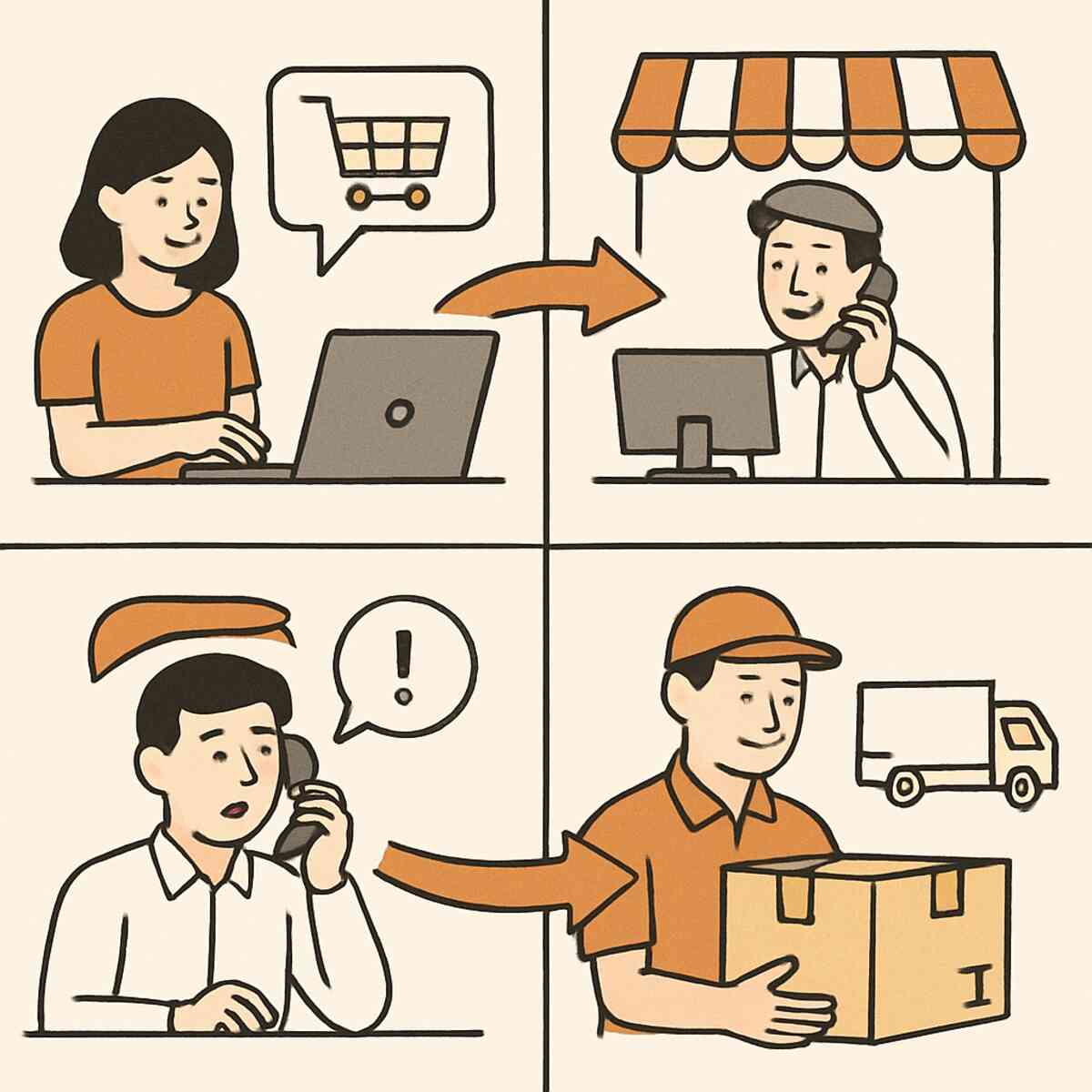
You’ve just made your first sale, and as the notification pings on your phone, the profit margin looks fantastic. To the customer, the transaction feels complete the moment they see a checkout confirmation screen. Behind the scenes, however, a complex sequence of events has just been set into motion. Your daily routine immediately shifts from marketing a great product to ensuring that product actually reaches its final destination without a hitch. The best guide to finding dropshipping order management.
Operating this system requires mastering the Relay Race framework. You take the buyer’s money and shipping details, run your initial leg of the race, and seamlessly hand that digital baton over to a supplier. You act as the conductor of an orchestra, directing warehouse workers you cannot see in a facility you do not own. Because you never physically touch the inventory yourself, effectively managing this flow of information becomes the true backbone of your business.
Navigating this gap between buyer and supplier is known as Invisible Middleman logistics. Sending a basic graphic T-shirt across the country highlights exactly how fragile this automated system can be. Your software must instantly capture customer details and transmit them to a factory halfway across the world, all while maintaining the illusion that the item is shipping from your own business. A single human typo—such as missing one digit in a delivery zip code—can derail the entire fulfillment process. The frustrated shopper will never blame an anonymous factory for their lost shirt; they will demand a refund directly from your store.
Industry data reveals that fulfilling an order usually breaks down at three predictable bottlenecks. These most common points of failure include inaccurate inventory syncing (selling an item that the supplier is currently out of stock on), manual data entry mistakes, and delayed supplier tracking updates. Every time data moves from your digital dashboard to a supplier’s system, the risk of a miscommunication increases. Catching these errors early prevents angry emails and protects your hard-earned reputation.
Exceptional accuracy is the only way to turn one-time impulse buyers into loyal returning customers. Most successful store owners set a baseline expectation of less than a one percent error rate, proving that backend efficiency matters just as much as a flashy storefront. By establishing solid dropshipping order management, you build a safety net that protects both your profits and your peace of mind. Achieving this requires step-by-step order lifecycle optimization, ensuring your logistics run just as beautifully as your website looks.
Why Your Store and Supplier Must Move in Sync
Imagine a customer buys a phone case from your shop, only to learn days later that the supplier sold out weeks ago. This happens because of “ghost stock”—items listed as available on your website that no longer exist in the supplier’s warehouse. To avoid this, think of your online store as a mirror. If the supplier’s physical warehouse (the reality) changes, your digital storefront (the reflection) must change instantly to match it. When that reflection breaks, you are forced to issue refunds to frustrated buyers.
Keeping this reflection accurate requires choosing between human effort and automated systems. A beginner might manually update quantities daily, but this leaves dangerous gaps where sold-out items can still be purchased. Instead, successful dropshippers rely on real-time inventory synchronization tools. These apps act as an invisible bridge connecting your checkout page to the supplier’s database, automatically updating available numbers and preventing out of stock orders before they happen.
Even with excellent software, smart store owners never fly completely blind. Protect your reputation by establishing this simple three-step daily inventory health check:
- Scan your dashboard for disconnected products or sync errors.
- Verify the supplier’s actual stock levels on your top three best-sellers.
- Pause any store listings that drop below a safe ten-unit buffer.
While this brief morning routine builds good habits, trying to run your entire catalog this way will quickly exhaust you, exposing the high price of manual data entry.
The High Price of Manual Data Entry
Typing customer details and product codes by hand might feel manageable when you only get one or two sales a week. However, this routine introduces the dangerous “fat finger” risk—the inevitable moment you mistype a shipping address or accidentally alter a product’s SKU (Stock Keeping Unit). Think of an SKU as a unique digital fingerprint for every specific size and color of an item. If a customer orders a medium blue shirt but a keyboard slip sends the supplier the SKU for a large red one, you are financially responsible for the replacement.
Those minor human errors quickly compound into devastating financial losses. Every wrongly shipped item means paying for the product twice, eating the return shipping costs, and spending hours writing apologies to frustrated buyers. Furthermore, trying to process dozens of daily orders by copying and pasting creates a hard ceiling on your success. In the debate of manual vs automated order processing, relying on your typing speed guarantees you will become the biggest bottleneck in your own company, making it impossible to scale your sales.
True business growth requires removing this daily data entry friction completely. Effective dropshipping order management isn’t about working harder at your keyboard; it is about setting up systems that pass information flawlessly from the buyer to the warehouse without your physical input. Escaping the risky copy-and-paste routine naturally prepares you for the next operational upgrade: automating the fulfillment bridge.
Automating the Fulfillment Bridge
Stepping away from the keyboard lets you finally run your business instead of letting it run you. The secret is setting up a digital bridge—an API (Application Programming Interface)—linking your website directly to your supplier’s database. Think of this software connection like an invisible postal worker grabbing an order and handing it to the warehouse instantly. By removing yourself as the manual middleman, you shift your role from data-entry clerk to a manager practicing true executive oversight.
A seamlessly automated order fulfillment process dramatically improves the customer experience. When someone buys a coffee mug, the software instantly routes their shipping details straight to the factory floor. The top rated dropshipping automation platforms excel at this invisible relay race. By eliminating the delay of you waking up and manually forwarding emails, these systems can easily reduce your “Time-to-Ship” by up to 48 hours.
That rapid processing keeps buyers returning, but it depends on your store speaking the supplier’s language. If the bridge sends an instant request, the factory’s computers must know exactly which design to pull. A fast connection is useless if it delivers the wrong instructions. To guarantee every automatic request pulls the right product, you must align your digital fingerprints, which naturally requires mastering SKU harmonization.
Mastering SKU Harmonization
Every digital fingerprint in e-commerce is called a SKU (Stock Keeping Unit). Think of it as a unique barcode identifying exactly what sits on a warehouse shelf. While your store might casually label a black t-shirt as “TEE-BLK,” your supplier might catalog it as “100-B-COTTON.” Harmonization is the essential process of linking your simple labels with their complex factory codes so the automated bridge never gets confused.
Behind the scenes, connecting these mismatched codes happens inside your centralized dashboard for sales tracking. When a customer makes a purchase, this software acts as a real-time translator. Instead of renaming all your public listings to match a supplier’s clunky system, you simply map their internal code to your storefront item. This guarantees 100% item accuracy during every automated sync without sacrificing your clean branding.
Product variants, such as different colors or sizes, make this translation process even more critical. A mapping misstep could mean shipping a medium blue phone case to a customer who ordered a large green one. By meticulously pairing each specific variant to its exact supplier counterpart, you eliminate these costly shipping “near-misses” and ensure buyers receive exactly what they paid for.
True inventory control relies entirely on this precise setup working flawlessly. If a factory runs out of that green case, the mapped SKU tells your system to immediately display “Out of Stock.” However, this digital safety net gets significantly more complicated when you try sourcing that identical case from three different factories at once, requiring you to navigate the multi-supplier maze.
Managing the Multi-Supplier Maze
Expanding beyond a single source introduces new logistical hurdles. If a buyer orders a coffee mug and a t-shirt sourced from different factories, successfully managing multiple dropshipping suppliers requires “split-shipping.” Rather than waiting to bundle everything into one box, your software automatically routes each item’s specific SKU to its respective factory, meaning the products will ship separately and arrive independently.
Because these separate packages land on doorsteps on different days, proactive communication is your best defense against frantic support emails. If buyers open a package expecting two items and find only one, they will immediately assume you made a mistake. To perfect tracking information delivery to customers, you must set expectations early using these automated messaging templates:
- Checkout Notice: “To deliver your items as fast as possible, your order may arrive in separate packages.”
- First Shipment Alert: “Great news! Part of your order has shipped. Here is your first tracking link.”
- Final Dispatch Alert: “The remaining items from your order are now on their way! Track their journey here.”
Behind the scenes, tying these scattered updates together relies on cross-supplier synchronization. As each factory dispatches an item, your central dashboard automatically collects the distinct tracking codes and attaches them to the buyer’s original master order. This prevents your backend from becoming disorganized while keeping the customer fully informed about their split deliveries. Once you master syncing these multi-package orders, the natural next step is minimizing the transit times altogether by speeding up the delivery clock and reducing logistics delays.
Speeding Up the Delivery Clock: Reducing Logistics Delays
Waiting for an order feels entirely different when you are the seller instead of the buyer. To speed up the process, you first need to understand the two halves of the delivery clock: Lead Time and Transit Time. Lead Time is the prep phase—the days your supplier takes to print a label and pack the box. Transit Time is the travel phase, measuring how long the courier takes to move that box to the buyer’s doorstep.
By analyzing both of these phases, savvy dropshippers can reliably cut delivery times by twenty percent. The trick lies in streamlining e-commerce supply chains through smarter partner selection, prioritizing a factory’s processing speed over minor cost savings. If a supplier takes five days just to print a label, finding an alternative with a 48-hour turnaround instantly shaves three days off the wait. To handle inevitable warehouse hiccups, you should also build a “Safety Buffer” into your storefront’s estimated arrival dates.
Adding this extra cushion—like promising a ten-day delivery when it normally takes seven—becomes absolutely crucial during the busy holiday season. A well-calculated safety buffer manages buyer expectations, essentially reducing shipping delays for customers because the package arrives “early” rather than late in their eyes. Protecting these fragile delivery timelines requires more than just picking faster couriers, however. To keep factories moving quickly, you must first focus on error-proofing your supplier communication so missing order details never stall a shipment.
Error-Proofing Your Supplier Communication
When an incorrect item reaches your buyer, fixing the mistake quickly hinges on how well you talk to your manufacturer. Resolving supplier communication issues requires extreme clarity, especially when navigating language barriers. Instead of sending an emotional paragraph about an angry customer, strip messages down to the bare essentials: the order number, the specific SKU (your unique item code), and a clear defect photo. This straightforward approach removes ambiguity, ensuring the factory immediately understands the problem rather than misinterpreting a lengthy complaint.
Designing a three-step protocol for these inevitable mishaps anchors solid dropshipping order management. First, verify the error with the customer; second, transmit the standardized defect report; and third, request a specific remedy like an expedited replacement. To prevent endless negotiations over these fixes, successful sellers introduce a Supplier Service Level Agreement (SLA). An SLA is simply a basic written understanding between you and the manufacturer that outlines exact expectations, such as minimum processing speeds and guaranteed refund policies for damaged goods.
Enforcing this agreement transforms chaotic problem-solving into a predictable, stress-free routine. Establishing professional benchmarks—such as demanding a 24-hour response time for defect reports—forces partners to treat your storefront seriously rather than as a side hobby. Once the factory rectifies the error and dispatches the replacement package, your final logistical duty involves keeping the buyer informed. Passing along those updated shipping details shifts the conversation from a past mistake to a future delivery, leading directly into how reliable tracking numbers provide the ultimate customer peace of mind.
Tracking Numbers: The Customer’s Peace of Mind
Waiting for an online purchase without updates feels like staring into a void, which explains why “Where is my order?” is a dropshipper’s most frequent support ticket. By automating tracking information delivery to customers, you can safely slash these inquiries by 50%. This efficiency relies on software acting as an invisible bridge between your storefront and the manufacturer. The moment the factory generates a shipping label, your system should instantly pull that data and forward it to the buyer, eliminating manual data entry while maintaining tight inventory control over what has actually left the warehouse.
Securing this buyer peace of mind depends heavily on transactional emails (automated messages triggered by order status changes rather than promotional marketing). To keep buyers confident throughout the waiting period, configure your store to send alerts at four essential milestones:
- Order confirmation: Triggered immediately following the checkout.
- Processing initiated: When the supplier receives the order and starts packing.
- Shipment dispatched: Delivering the carrier’s live tracking link.
- Last-mile tracking: When the local post office takes over for the final delivery stage.
Choosing dedicated apps to manage these alerts translates complex international shipping routes into simple, branded tracking pages for your buyers. This transparent communication turns weeks of silent transit time into a reassuring, professional journey. Yet, even with flawless delivery tracking, some items will arrive damaged or simply fail to meet buyer expectations. When those inevitable refund requests appear, your next operational challenge becomes clear: navigating reverse logistics to handle returns without losing your shirt.
Reverse Logistics: Handling Returns without Losing Your Shirt
Even with perfect shipping communication, a customer will eventually want their money back. You are now thrust into reverse logistics—the process of moving a product backward from the customer to the warehouse. Traditional retail returns are simple, but reverse logistics for dropshippers involves a complex third party: your overseas supplier. Because shipping a $15 item back to an international factory often costs more than the product itself, you need a strategy that protects your profit margins without frustrating your buyer.
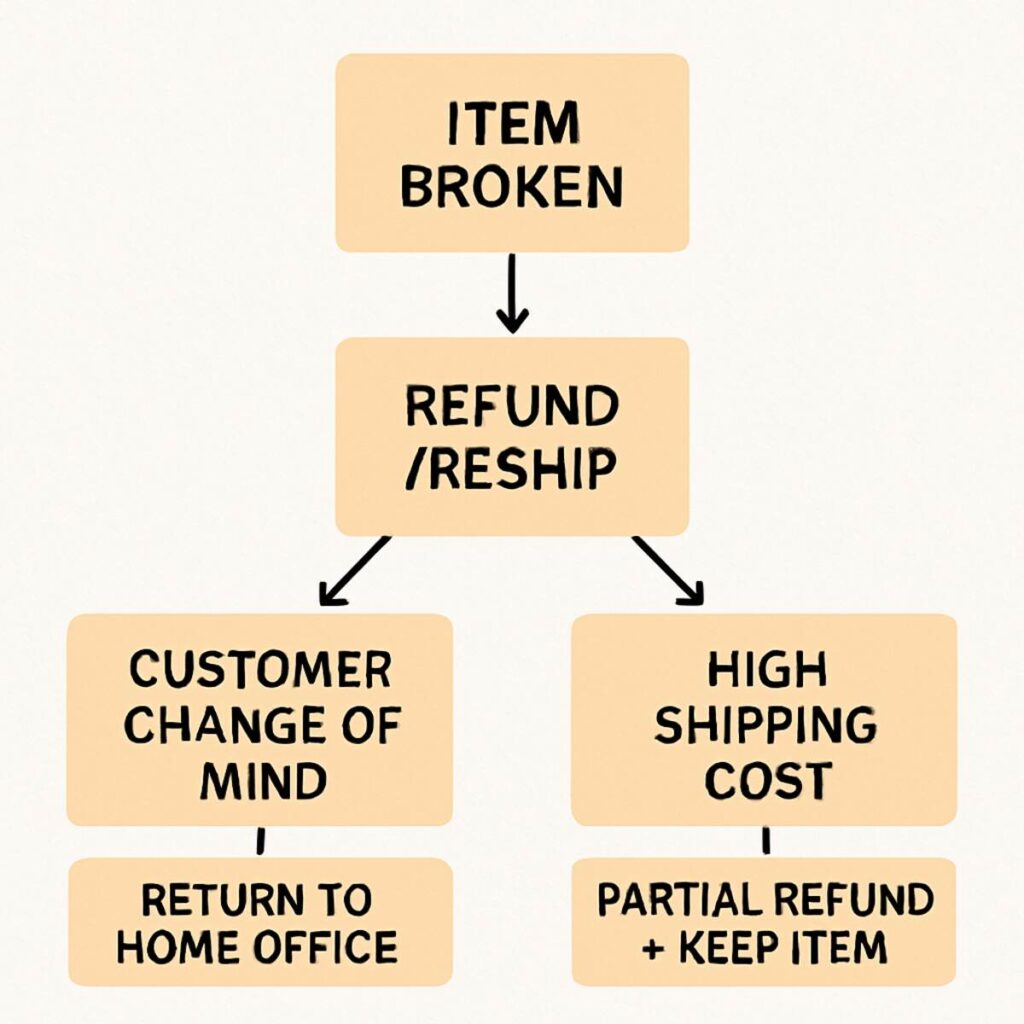
Mastering how to handle dropshipping returns works best as a “choose your own adventure” decision tree. Instead of a blanket policy, evaluate the customer’s return reason and your item’s basic cost of goods sold (COGS) to determine your next move:
- Item is broken: Request photo proof, then require the supplier to issue a free replacement or a full refund.
- Customer changed their mind: Have the buyer ship the undamaged item to your home address so you can resell it locally, avoiding high international return fees.
- Return shipping costs too much: Deploy a “No-Return Refund” strategy. Offer the buyer a 30% partial refund and let them keep the item, saving you the expense of return freight.
Always negotiate these return conditions upfront with your manufacturer so you aren’t paying out-of-pocket for their factory errors. Once you build a safety net for these individual hiccups, you are finally ready to handle larger volumes and tackle Scaling for Growth: Bulk Order Processing Efficiency.
Scaling for Growth: Bulk Order Processing Efficiency
Getting a sudden sales spike is every beginner’s dream, but it quickly becomes a nightmare if you process purchases individually. When your store transitions from two sales a day to two hundred, manually copying customer addresses into your supplier’s website inevitably leads to costly mistakes. You must shift to bulk order processing efficiency, treating dozens of individual transactions as one cohesive task.
Think of this shift like doing laundry; you would never run the washing machine for one single t-shirt. Instead of reacting to every new notification ping, successful dropshippers use a centralized dashboard for sales tracking to gather all daily orders into a single digital basket. Grouping these transactions lets you approve, route, and pay for hundreds of shipments simultaneously, drastically reducing your daily workload while protecting your margins from human error.
For suppliers who lack direct software connections to your store, the industry standard solution is the CSV upload. A CSV (Comma Separated Values) is simply a basic spreadsheet listing your customers’ items and shipping details in neat rows. Rather than messaging your factory a messy list of instructions, you download this file from your store and upload it directly to your supplier’s system, allowing them to process the entire batch at once.
Mastering these straightforward spreadsheet strategies guarantees that an unexpected viral weekend won’t break your business operations. By learning these automated tools now, you ensure your fulfillment process scales safely with your growing volume. With this foundation firmly built, you are ready to execute Your 30-Day Order Accuracy Action Plan.
Your 30-Day Order Accuracy Action Plan
You started this journey watching a customer click “Buy,” wondering how that digital ping translates into a physical package on a doorstep. Now, you hold the blueprints to the entire lifecycle. From mastering the invisible relay of supplier communication to confidently handling the speed bumps of reverse logistics, the back-end of your store is no longer a mystery. You have transformed from a passive bystander into the active architect of your business infrastructure.
The true power of effective dropshipping order management lies in realizing you do not have to be the bottleneck. By setting up systems that catch errors before they happen—like syncing your digital storefront to your supplier’s physical warehouse—you protect your time and your reputation. Reliable inventory management is no longer a guessing game; it becomes a dependable mirror reflecting real-time stock levels. Your daily operations can now be proactive rather than reactive.
Knowledge without application, however, will not ship your products. To transform these concepts into a functional, hands-off operation, you need a structured rollout. Building your system gradually prevents overwhelming yourself and ensures every software connection works exactly as intended. Follow this 30-day implementation calendar to turn your logistical foundation into reality:
- Week 1: Audit and Select. Review your current manual steps and select your core software to bridge the gap between your store and your suppliers.
- Week 2: Sync and Automate. Connect your platforms, ensuring your inventory systems instantly update product availability and pricing without your manual input.
- Week 3: Troubleshoot and Test. Place a test order to verify that tracking information automatically routes from the supplier back to the customer’s inbox.
- Week 4: Prepare the Safety Net. Draft your customer service templates and establish clear rules for returns, refunds, and out-of-stock scenarios.
By the end of this month, you will finalize your automation tech stack and remove yourself from the tedious data-entry loop. Your next critical habit is to establish a weekly audit of order accuracy metrics. Taking ten minutes every Friday to review your time-to-ship data ensures your suppliers are holding up their end of the bargain. If a partner starts slipping, your data will flag it instantly.
This disciplined approach directly influences your ultimate success metrics: high customer satisfaction and strict profit retention. When buyers receive the right item, on time, with transparent tracking, they trust you. That trust eliminates the costly drain of refunds, chargebacks, and desperate customer service emails, keeping the money you earned securely in your account.
Mastering these logistics changes your identity as a business owner. Once comfortable with your automated workflows, you stop acting as a glorified shipping clerk. You are now free to step back, look at the bigger picture, and shift your daily focus from managing orders to growing the brand.