
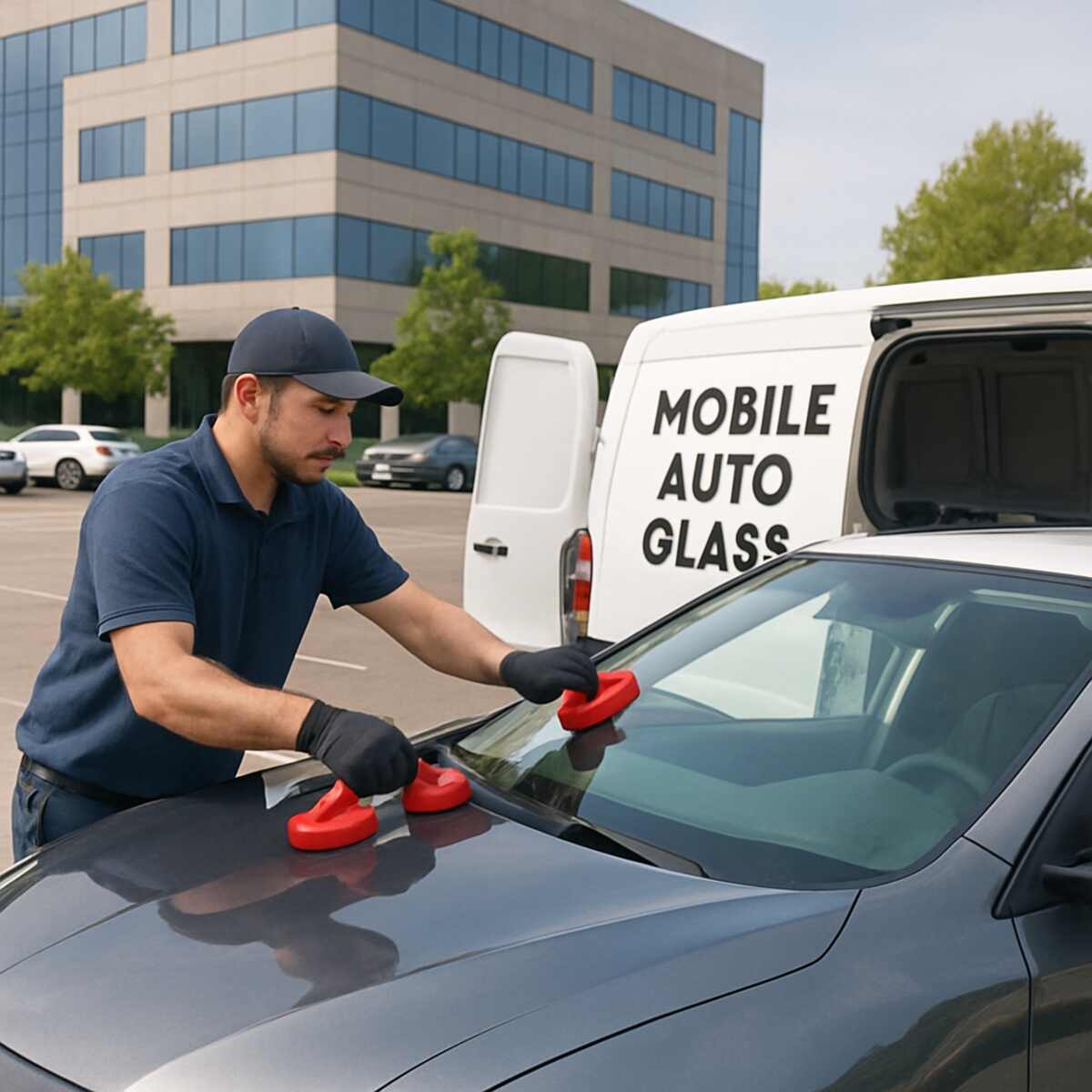
Benefits of Mobile Auto Glass Repair Services
You are cruising down the highway, enjoying your favorite playlist, when suddenly—smack. A stray pebble kicked up by a passing semi-truck hits your windshield. It leaves behind a star-shaped chip that, while small, instantly ruins your peace of mind. The Amazing fact about mobile auto glass repair.
For decades, the standard response to this scenario involved taking time off work, driving an unsafe vehicle across town, and sitting in a dingy waiting room for hours while your vehicle was serviced. Fortunately, the auto repair industry has evolved. Today, mobile auto glass repair services bring the auto shop directly to your driveway, offering unparalleled convenience without sacrificing quality.
Whether you are dealing with a minor chip or a completely shattered window, understanding the benefits and mechanics of on-the-go glass services can save you time, money, and stress. This comprehensive guide will explore everything you need to know about the modern auto glass industry, from navigating insurance claims to the technology keeping your vehicle safe on the road.
The Evolution of Auto Glass Services
Historically, fixing a damaged windshield was a cumbersome process. Auto glass is heavy, fragile, and requires specialized adhesives that need time to cure in controlled environments. However, advancements in modern urethanes, UV-curing resins, and mobile tool kits have completely revolutionized how technicians operate.
Today, a fully equipped service van acts as a rolling garage. This evolution has birthed a new standard in vehicle maintenance, allowing experts to perform flawless repairs and replacements literally anywhere.
Why Convenience is King
The most immediate benefit of choosing a mobile service is the time you save. Instead of disrupting your schedule, you can opt for windshield replacement at home or work.
Consider these scenarios:
- The Busy Professional: You have back-to-back meetings. A mobile technician can replace your glass in your office parking lot while you work.
- The Stay-at-Home Parent: You do not have to drag toddlers to a waiting room. The repair happens right in your driveway while your kids nap inside.
- The Stranded Motorist: If your glass is completely shattered and unsafe to drive, mobile units can meet you where the vehicle is parked, saving you the exorbitant cost of a tow truck.
Understanding Your Damage: Repair vs. Replacement
One of the most common questions vehicle owners ask when they notice damage is: “Do I need a whole new windshield, or can this be fixed?”
Knowing when to repair vs replace windshield glass is crucial for both your safety and your wallet.
The Professional Rock Chip Repair Process
If the damage is a minor chip or a short crack, a repair is usually the best course of action. The professional rock chip repair process is a fascinating blend of physics and chemistry that restores the structural integrity of the glass.
Here is how a certified technician handles it:
- Cleaning and Preparation: The technician cleans the impact point, removing dirt, moisture, and loose glass shards using specialized picks and vacuums.
- Creating a Vacuum: A bridge tool is mounted over the chip. It creates a vacuum to suck the trapped air out of the microscopic fissures in the glass.
- Injecting the Resin: Once the air is removed, an acrylic resin is injected under high pressure to fill every tiny crack.
- Curing: The technician uses a UV light to cure (harden) the resin.
- Polishing: Finally, the surface is scraped flush and polished to ensure the wipers glide smoothly over the area.
But how long does windshield resin take to cure? Thanks to modern high-intensity UV lamps used by professionals, the resin typically cures in just 3 to 5 minutes. The entire repair process usually takes under 30 minutes.
Signs a Windshield Crack is Non-Repairable
While repairs are fast and cost-effective, they are not always possible. Structural integrity is the primary concern. You will likely need on-site windshield replacement services if you notice any of the following signs a windshield crack is non-repairable:
- Size: The crack is longer than a dollar bill (about 6 inches), or the chip is larger than a quarter.
- Depth: The damage penetrates both layers of the glass.
- Location: The crack is directly in the driver’s line of sight. Even the best repairs can leave a slight distortion that could dangerously distract the driver.
- Edge Proximity: The crack reaches the outer edge of the windshield. The perimeter of the glass is critical for the structural strength of the vehicle’s cabin.
- Multiple Impacts: There are three or more distinct chips or cracks on the same windshield.

The Science of Safety: Laminated vs Tempered Glass
To truly appreciate the necessity of prompt auto glass repair, it helps to understand the materials keeping you safe. Modern vehicles utilize two completely different types of glass, each engineered for specific safety purposes.
Laminated Safety Glass
Your front windshield is made of laminated glass. When we talk about laminated vs tempered safety glass, laminated glass is designed not to shatter. It consists of two sheets of glass with a thin, strong layer of Polyvinyl Butyral (PVB) plastic sandwiched in between.
If a rock hits the windshield, the outer layer of glass may crack, but the PVB plastic holds the shards in place. This prevents glass from flying into your face while driving at 70 mph. Furthermore, the windshield provides up to 45% of the cabin’s structural integrity in a front-end collision and up to 60% in a rollover accident. A compromised windshield can cause the vehicle’s roof to cave in during a crash.
Tempered Safety Glass
Your side windows and rear windshield are typically made of tempered glass. This glass is rapidly heated and cooled during the manufacturing process, making it incredibly tough. However, when it breaks, it is designed to shatter instantly into thousands of dull, pebble-like pieces.
This design ensures that in the event of a severe accident, occupants are not sliced by large, jagged shards of glass. Because tempered glass shatters completely upon impact, it cannot be repaired; it must always be replaced.
Navigating the Costs and Financials
Dealing with vehicle repairs is often a source of financial anxiety. Let’s break down the economics of mobile auto glass repair so you know exactly what to expect.
Analyzing Windshield Crack Repair Cost
If you catch the damage early, fixing it is surprisingly affordable. The average windshield crack repair cost ranges from $50 to $150, depending on your vehicle and location. Many mobile services offer bundle deals if you have multiple rock chips on the same windshield.
Actionable Tip: Do not wait to fix a chip. Temperature fluctuations (like blasting your AC on a hot summer day or running the defroster in the winter) cause glass to expand and contract. This will inevitably turn a cheap, fixable $50 chip into an unfixable crack that requires a $500 replacement.
Insurance Coverage for Windshield Damage
Here is the best news for drivers: your insurance will likely cover the cost. Insurance coverage for windshield damage falls under the comprehensive portion of your auto insurance policy.
In many cases, if you only need a repair (not a replacement), insurance companies will completely waive your deductible. This means the repair is 100% free for you. They do this because they would much rather pay a mobile technician $75 today than pay $800 for a full replacement tomorrow when the crack spreads.
Furthermore, several US states (such as Florida, Kentucky, and South Carolina) have “Zero Deductible” laws for windshield replacements. If you carry comprehensive insurance in these states, the law mandates that your insurance company replaces your windshield with zero out-of-pocket cost to you.
Step-by-Step Guide to Filing an Auto Glass Insurance Claim
If you have never filed a claim for glass, the process might seem daunting. However, top-tier mobile glass companies often handle the paperwork for you. Here is the standard process for filing an auto glass insurance claim:
- Assess the Damage: Determine if it is a repair or replacement.
- Call a Reputable Mobile Glass Service: When you call them, mention you want to use your insurance.
- The Three-Way Call: The glass company will often initiate a three-way call with your insurance provider’s glass network (like Safelite Solutions or LYNX Services).
- Verification: The insurance representative will verify your coverage, confirm your deductible, and assign a dispatch number to your chosen glass shop.
- Scheduling: The mobile unit is dispatched to your location, and the shop bills the insurance company directly.
The Mobile Replacement Process: What to Expect
When a simple repair won’t cut it, it is time for a full replacement. Having a technician come to your home to swap out a windshield is a fascinating process to watch. Here is a behind-the-scenes look at how the pros do it.
Step 1: Pre-Inspection and Protection
The technician will inspect your vehicle for any existing scratches or damage to the paint around the windshield. They will then drape protective towels over your hood and dashboard to ensure no debris damages your car.
Step 2: Removing the Old Glass
Using specialized cut-out tools—such as cold knives, wire systems, or powered extractors—the technician carefully cuts through the old urethane adhesive holding the windshield in place. The glass is then lifted away using heavy-duty suction cups.
Step 3: Preparing the Pinch Weld
The metal frame where the windshield sits is called the pinch weld. The technician trims the old urethane down to a thin, even layer (about 1-2 millimeters). If there is any rust on the pinch weld, it must be treated and primed, as rust can compromise the adhesion of the new glass and lead to leaks or blow-outs during an airbag deployment.
Step 4: Applying the New Urethane
A thick, triangular bead of high-performance, automotive-grade urethane adhesive is applied continuously around the perimeter of the vehicle’s frame.
Step 5: Setting the New Glass
The new windshield is carefully positioned and pressed into the fresh urethane. The technician reinstalls the windshield wipers, cowl, and rearview mirror.
Step 6: Curing and Drive-Away Time
This is the most critical safety step. Urethane needs time to cure before it can safely hold the windshield in place during a collision. Your technician will inform you of the safe drive-away time for auto glass. Depending on the type of urethane used, the temperature, and the humidity, this time can range from 30 minutes to a few hours.
Important Warning: Never drive your vehicle before the safe drive-away time has elapsed. If you get into an accident before the urethane is fully cured, the passenger-side airbag (which bounces off the windshield to protect the passenger) could blow the windshield right out of the car, rendering the airbag useless.
Quality Matters: Parts, Technology, and Technicians
Not all auto glass repairs are created equal. When booking a mobile service, the materials used and the expertise of the person doing the job are paramount to your safety.
OEM vs Aftermarket Auto Glass
When replacing a windshield, you generally have two choices: OEM (Original Equipment Manufacturer) or Aftermarket glass. Understanding OEM vs aftermarket auto glass is vital for ensuring the longevity of your vehicle.
- OEM Glass: This glass is manufactured by the same company that provided the original glass for your car maker (e.g., Pilkington, PGW, or Sekurit). It is identical to your original windshield in thickness, durability, color, and shape. It even features the manufacturer’s logo.
- OEE (Original Equipment Equivalent): This is made to the exact same standards as OEM glass but without the car brand’s logo. It is generally considered just as good as OEM.
- Aftermarket Glass: Manufactured by companies that do not contract with car makers. While it must meet minimum Department of Transportation (DOT) safety standards, it may vary slightly in thickness, curvature, or acoustic dampening compared to OEM glass.
For modern vehicles with complex sensors, OEM or OEE glass is highly recommended to ensure all electronic systems function correctly.
The Rise of Smart Windshields: ADAS Recalibration
Ten years ago, a windshield was just a piece of glass. Today, it is a highly sophisticated technological hub.
Most modern vehicles are equipped with Advanced Driver Assistance Systems (ADAS). Features like lane departure warnings, forward collision alerts, adaptive cruise control, and automatic emergency braking rely heavily on a forward-facing camera mounted directly to the windshield behind the rearview mirror.
When a windshield is replaced, this camera is disconnected and reattached to the new glass. Even a millimeter of variation in the new glass’s curvature or a slight nudge to the camera bracket can throw the system’s view off by several degrees. At 70 mph, a slight camera misalignment can result in your car thinking a vehicle is in your lane when it is not, potentially triggering emergency braking at the wrong time.
This is why ADAS camera recalibration after replacement is absolutely mandatory.
Reputable mobile auto glass repair companies now carry highly advanced, portable recalibration equipment in their vans. Using laser-guided targets and specialized diagnostic computers connected to your vehicle’s OBD-II port, the technician will recalibrate the camera system in your driveway to ensure your safety features work exactly as they did from the factory.
Why Technician Qualifications Matter
The auto glass industry is unfortunately not heavily regulated by the government in many regions. Anyone can technically buy a cold knife and a tube of urethane and call themselves an auto glass technician. Therefore, verifying certified mobile technician qualifications is your responsibility as a consumer.
Look for technicians who are certified by the Auto Glass Safety Council (AGSC). AGSC-certified technicians have undergone rigorous training in ANSI (American National Standards Institute) standards for auto glass replacement. They know the exact chemical properties of the urethanes they use, understand proper rust treatment, and are trained to prioritize your safety above all else.
Environmental Factors in Mobile Repair
Because mobile auto glass repair takes place outside a controlled garage environment, Mother Nature plays a significant role in how and when a repair can be completed.
Understanding the acceptable weather conditions for outdoor glass repair will help you schedule your service appropriately.
- Rain and Moisture: Urethane adhesives and repair resins hate moisture. If it is actively raining, a mobile technician cannot replace or repair your glass in the open. However, if you have a garage or a carport, the technician can easily perform the job under cover.
- Extreme Heat: Direct summer sunlight can make the glass too hot to work with safely. High heat causes repair resins to cure too quickly (before they have fully penetrated the crack) and can make urethane adhesives flash-cure prematurely. Technicians will often use pop-up canopies or ask to move your vehicle into the shade on sweltering days.
- Extreme Cold: In freezing temperatures, glass becomes brittle, and the PVB interlayer shrinks. Adhesives also take much longer to cure. During winter months, mobile technicians may use specialized fast-curing winter urethanes or ask to perform the replacement inside a heated garage.
How to Choose the Best “Glass Repair Near Me”
With a simple internet search for “glass repair near me,” you will likely be bombarded with dozens of options ranging from massive national chains to independent local operators. How do you choose the right one?
Here is a checklist for vetting mobile auto glass repair services:
- Check for AGSC Certification: As mentioned earlier, this ensures the company adheres to strict safety guidelines.
- Ask About ADAS Capabilities: If your car is newer than 2015, ask if they perform camera recalibration on-site. If they say “you don’t need it” or tell you to take it to the dealer afterward, find another company.
- Inquire About the Warranty: A high-quality company will offer a lifetime warranty on their workmanship, covering air leaks, water leaks, and manufacturer defects in the glass.
- Read the Reviews: Look beyond the star rating. Read the actual reviews. Look for customers who mention the technician’s punctuality, cleanliness, and professionalism.
- Verify Insurance Expertise: Ensure they have experience working with your specific insurance carrier to save you from administrative headaches.
Frequently Asked Questions (FAQs)
To further demystify the world of windshields, let’s address some of the most common questions vehicle owners have.
1. Can a mobile technician replace my rear window or side windows?
Yes. While windshields are the most common repair, mobile technicians are fully equipped to handle side door glass, vent glass, quarter glass, and rear back glass (including those with built-in defrosting grids).
2. Will a repaired windshield look brand new?
No. It is important to manage your expectations regarding a windshield repair. A rock chip repair is a structural fix designed to prevent the crack from spreading and to restore the integrity of the glass. While the visual appearance will improve significantly (usually looking 60% to 80% clearer), a faint scar or blemish will still be visible where the impact occurred.
3. Do I need to clean my car before the technician arrives?
You do not need to detail your car, but it is highly appreciated (and safer) if you remove personal items from your dashboard and passenger seat. If you have a shattered side window, the technician will vacuum the glass out of the door panel and the seat for you.
4. Can a windshield be replaced in an apartment complex parking lot?
Absolutely. As long as there is enough space to safely park the service van near your vehicle and fully open the driver and passenger doors, a mobile technician can do the job almost anywhere.
5. How long does the whole mobile replacement process take?
The physical replacement usually takes about 45 minutes to an hour. Recalibration (if needed) adds another 30 to 45 minutes. Finally, you must wait for the safe drive-away time (usually 30 to 60 minutes) before operating the vehicle. In total, expect the vehicle to be out of commission for about 2 to 3 hours.
Conclusion
A damaged windshield is a hassle, but it no longer has to ruin your day or compromise your safety. The modern era of mobile auto glass repair has completely transformed the way we handle vehicle maintenance. By bringing expert technicians, high-quality materials, and advanced recalibration technology directly to your doorstep, mobile services provide an unmatched level of convenience.
Remember, your windshield is not just a window to the road; it is a critical safety component of your vehicle’s structural and electronic ecosystem. Whether you are addressing a tiny rock chip before the winter cold expands it, or opting for a full windshield replacement at your office, acting promptly is your best defense against higher costs and unsafe driving conditions.
Next time you hear that dreaded smack on the highway, take a deep breath. Know that with a quick phone call and a check of your insurance policy, a certified mobile professional can have you safely back on the road in no time—without you ever having to leave your house.