
Choosing the Right Proxies for Automation
Ever tried to buy limited-edition sneakers the second they launch, only to see ‘Sold Out’ instantly? You aren’t just competing with other fans; you’re up against automated bots. These bots rely on a hidden tool to get around the “one-per-person” rule, allowing them to make thousands of purchases at once. That tool is central to the world of using proxies for automation. Choose the best proxies for scraping.
This process relies on a core concept of the internet: the IP address. Think of it as your computer’s temporary mailing address. Every time you connect to a website, your device sends a request from this address. The website then uses that exact “return address” to send the webpage, video, or product information back to you. Without it, the internet simply wouldn’t work.
Because this address uniquely identifies your device’s connection, it’s also how websites spot suspicious activity. If a thousand requests for those sneakers all come from the same IP address in one second, the site’s security flags it as a bot and blocks it. This is the fundamental challenge in automation—and avoiding IP bans is the first problem that must be solved.
What Is an Automation ‘Bot’ in This Digital World?
When you hear the word “bot,” your mind might jump to intelligent, walking robots from science fiction. In reality, the bots we’re talking about are much simpler. An automation bot is just a piece of software—a script written to perform a single, repetitive task online. It isn’t smart or conscious; think of it less like a super-villain and more like a tireless digital worker that only knows how to follow one specific instruction over and over again.
The true power of a bot lies in its incredible speed and endurance for boring tasks. For example, imagine you want to snag a popular concert ticket the second it goes on sale. You could sit there, refreshing the page as fast as you can, but you’re still limited by human speed. A bot, however, can be programmed to send that “refresh” request hundreds of times per second. This is the core of automating tasks: offloading a simple, mind-numbing job to a program that can do it far better than any person could.
However, this inhuman speed is also the bot’s biggest vulnerability. Websites are built to handle traffic from people, not from software firing off requests at lightning speed. When a website’s security system sees hundreds of connection attempts from one digital address in just a few seconds, it immediately raises a red flag and blocks it. This is the central problem that an automation proxy server is designed to solve.
Why Websites Get Angry: The Two Big Reasons Your Bot Gets Blocked
A website’s security system isn’t acting out of spite when it blocks your bot; it’s simply enforcing a set of automatic rules. If an automated script gets shut down, it almost always broke one of two fundamental policies designed to keep the site stable and its content secure.
The most common reason for a block is moving too fast. Imagine a bartender who gets suspicious of someone ordering a hundred drinks in a minute—they’d cut them off immediately. Websites do the same thing through a process called Rate Limiting. They set a cap on how many requests a single IP address can make in a short period. Your bot, sending hundreds of requests per second, instantly breaks this rule. The site’s system flags the activity as inhuman, triggering an automatic block and making it impossible to continue.
Another major hurdle is your bot’s location. You’ve likely run into this yourself when a video service tells you, “This content is not available in your region.” That’s Geo-blocking in action. Websites read your IP address to determine your country and can restrict access based on licensing deals or market-specific pricing. If you’re using a bot to check prices on a UK-only site from an IP address in Canada, you’ll be stopped at the digital border before you even begin.
Successful automation must find a way to cleverly bypass these anti-bot detection systems. To get past the roadblocks of rate limits and geo-blocks, a bot can’t just use its own, single IP address. It needs a disguise—or rather, thousands of them.
The ‘Digital Middleman’: What Is an Automation Proxy Server?
To get around digital roadblocks like rate limits and geo-blocks, your bot needs a clever disguise. This is precisely what a proxy provides. Think of it as a personal shopper you send into a store for you. You tell them what you want, they go in and get it, and the store only ever interacts with your shopper. In the digital world, an automation proxy server is a middleman that makes internet requests on your behalf, masking your true identity.
When using proxies, the process is simple but powerful. Instead of your computer sending a request directly to a website, it first sends it to the proxy server. The proxy then forwards that request to the website using its own IP address. To the website, it looks like the proxy is the one asking for information. As the diagram below shows, the website sends the data back to the proxy, which then passes it along to you, all without ever revealing your computer’s real “internet address.”
This setup is the key to solving the automation puzzle. A single proxy can help you appear to be in a different country, solving the geo-blocking problem. But what about the speed problem? A website will still block one proxy that sends 1,000 requests in a minute. The real magic happens when a bot can use not just one middleman, but thousands of them, one after another.
How a Single Bot Can Act Like a Thousand Different People
A single proxy is a great disguise, but if the same person in the same disguise keeps running in and out of a store a hundred times a minute, the security guard is going to get suspicious. Similarly, even if you’re using a proxy, sending hundreds of requests from that single IP address will still trigger a website’s rate limits and get you blocked. To successfully automate tasks at high speed, a bot needs more than one disguise—it needs an entire wardrobe.
This is where the idea of a proxy pool comes in. Instead of using just one middleman, a bot is given access to a large collection—sometimes thousands or even millions—of different proxy servers, each with its own unique IP address. Think of it less like sending one personal shopper to the store 1,000 times, and more like sending 1,000 different shoppers into the store, with each one going only once. To the store, it just looks like a busy day.
Returning to our limited-edition sneaker example, a bot trying to secure a pair needs to check inventory and attempt a purchase over and over. When it’s connected to a proxy pool, it can use a different proxy for every single attempt. The first request comes from an IP address in Ohio, the next from California, and the third from Florida. The website doesn’t see one desperate bot; it sees thousands of seemingly unrelated customers all trying to buy the shoes, which is exactly the kind of traffic it expects during a major launch.
By combining the raw speed of a bot with the massive scale of a proxy pool, automation can fly under the radar and accomplish tasks that would be impossible for a human. This strategy of rapidly switching between IP addresses is the secret behind how so many high-volume tasks are automated without getting blocked. But it also raises an important question: can savvy websites tell the difference between these proxies? As it turns out, not all disguises are created equal.
The ‘Office Park’ vs. The ‘Real Home’: Datacenter vs. Residential Proxies
When a bot puts on a disguise in the form of a proxy, the most important question a website’s security asks is, “Where did that disguise come from?” The origin of a proxy’s IP address determines how trustworthy it appears, and this is where proxies split into two main categories. Understanding this difference is like knowing why a security guard pays more attention to someone in a cheap mask than someone who blends in perfectly with the crowd.
The first and most common type is a Datacenter Proxy. Think of these as IP addresses originating from a massive, publicly known business park. They are created in bulk inside commercial data centers—the same places that host websites and cloud services. Because they aren’t associated with a home internet provider, it’s relatively easy for a website to identify a block of datacenter IPs and flag them as non-human traffic. They are fast, cheap, and plentiful, making them useful for simple tasks, but they offer a very thin disguise.
On the other end of the spectrum are Residential Proxies. If datacenter proxies are addresses in an office park, residential proxies are addresses from a real suburban neighborhood. These are genuine IP addresses assigned by Internet Service Providers (like Comcast, Verizon, or AT&T) to homeowners. When a bot uses a residential proxy, its request looks identical to a request coming from a regular person surfing the web from their living room. This makes them incredibly difficult for websites to detect and block.
So, why would anyone use a datacenter proxy if it’s so easy to spot? The answer comes down to a simple trade-off: cost versus stealth. Datacenter proxies are far cheaper and can be faster, making them a good choice for scraping data from less-protected websites. Residential proxies, however, provide the ultimate camouflage. They are significantly more expensive but are essential for getting past the heavy security on e-commerce, ticketing, and social media sites.
This distinction is the entire ballgame for high-stakes automation. The proxy’s origin story—whether it was born in a server rack or assigned to a home—determines its effectiveness. For a bot trying to buy a rare pair of Nikes or scrape flight prices from a major airline, appearing like a regular person shopping from their couch isn’t just an advantage; it’s a requirement.
Why Sneaker Bots Need Proxies That Look Like a Real Home
Revisiting those instantly sold-out sneakers highlights the difference between an ‘office park’ and a ‘real home’ proxy. High-demand sites like Nike or ticket platforms are digital fortresses. Their security actively profiles every visitor’s IP address. When a bot shows up using a datacenter proxy, it’s like someone trying to sneak into a gala wearing a fake mustache. The website’s anti-bot system spots the ‘office park’ address and slams the door shut.
To succeed, a bot needs a disguise that looks exactly like a real shopper. This is why residential proxies are essential for bypassing anti-bot detection systems. A request sent through a residential proxy doesn’t come from a known commercial server farm; it originates from a regular home internet connection. To the website, it looks like Jane Doe from Ohio is buying shoes. It’s the perfect camouflage to get past the digital guards and join the queue.
This need for stealth isn’t just for sneakers. It’s crucial for proxies for social media management, where an agency handles dozens of client accounts without getting flagged. Similarly, businesses use residential proxies for web scraping to gather prices from tough sites like Amazon or airlines, which invest heavily in blocking bots. For these high-stakes tasks, blending in with normal user traffic is the only way to avoid being blocked.
Naturally, this level of camouflage costs more. Residential proxies are a significant investment compared to datacenter ones. But for critical tasks, the cost is a necessary expense. The proxy’s price is minimal next to the profit on a rare item or the value of crucial competitor data. In these situations, using a cheap proxy isn’t a saving—it’s a guaranteed failure.
When an ‘Office Park’ Proxy Is a Smart and Thrifty Choice
If residential proxies are the secret agents for high-security missions, does that make datacenter proxies useless? Far from it. Think of them not as spies, but as factory workers: incredibly fast, efficient, and affordable. When your automation task doesn’t require sneaking past digital bodyguards, the raw speed and lower cost of a datacenter proxy make it the superior choice. They aren’t trying to blend in; they are built for pure performance when no one is trying to stop them.
Imagine your bot’s job is to gather public information from thousands of pages on a simple website, like a local business directory or a public forum. These sites have minimal security and expect high traffic. In this scenario, the debate of datacenter vs residential proxies for bots is an easy one. You need to make a huge number of requests quickly, and a datacenter proxy’s server-grade speed is unmatched. Many unlimited bandwidth proxy providers offer affordable datacenter plans, making them perfect for these high-volume web scraping proxies tasks where cost-efficiency is key.
The right proxy depends on your target. For a heavily guarded site like a sneaker store, you need the residential proxy’s expensive camouflage. But for less-protected sites where you just need to work fast, the datacenter proxy is a smart, thrifty powerhouse. This principle of matching your tool to the environment becomes even more specific when automation moves from websites to the world of mobile apps.
The Mobile Advantage: How 4G/5G Proxies Work for TikTok and Instagram
As the internet has shifted from our desktops to the phones in our pockets, a new and even more powerful type of proxy has emerged. If a residential proxy lets your bot borrow a home’s internet address, a mobile proxy lets it borrow the internet connection of a real smartphone. This means your bot’s activity appears to come from a device on a major mobile network like Verizon or AT&T, which is the ultimate form of digital camouflage for accessing mobile-first apps like Instagram or TikTok.
The unique power of a mobile proxy comes from a simple fact: thousands of real people share the same mobile IP address at any given moment. Mobile carriers just don’t have enough unique addresses to give one to every single phone connected to their network. For a platform like TikTok, this creates a major dilemma. If they block one IP address because they suspect a bot, they risk blocking hundreds or even thousands of legitimate users who happen to share it. This makes them extremely hesitant to issue a block, which is the key to avoiding ip bans during automation.
This high level of trust is essential for automation on the strictest platforms. When a business needs reliable proxies for social media management across dozens of client accounts, or a marketing team uses 4G 5G proxies for TikTok automation to study trends, they need to look exactly like a typical mobile user. A mobile proxy provides the most authentic digital identity possible because its IP address is indistinguishable from the crowd of real smartphone users accessing the app at the same time.
Choosing the right type of proxy—datacenter, residential, or mobile—is like picking the right disguise for a specific mission. But there’s another crucial question that determines the success of your automation: should your bot wear the same disguise the whole time, or should it constantly switch between different ones? This choice between a single, consistent identity and a thousand changing faces is our next topic.
One Secret Identity or a Thousand? Static vs. Rotating Proxies
With an understanding of the different disguises a bot can wear—a datacenter, residential, or mobile identity—we arrive at the next critical question: Is it better to use the same disguise every time, or to constantly change into new ones? The answer depends entirely on the job, and it leads us to the crucial difference between static vs rotating IP addresses.
Imagine you’re managing a company’s social media account. You want the platform to see you logging in from the same general location every day to build trust and avoid triggering security alerts. For this, you would use a static proxy. It gives you one single, dedicated IP address that doesn’t change. Think of it like having a secret office phone number; it’s a consistent identity that proves you are who you say you are, day after day. This stability is perfect for tasks that require a long-term, trusted relationship with a website.
But what if your goal is the exact opposite? What if you need to be completely anonymous while performing thousands of tasks, like checking the price of a product on 1,000 different retail sites? If all those requests came from one static IP, you’d be blocked instantly. This is where rotating proxies come in. A rotating proxy gives you access to a huge pool of IP addresses and automatically swaps your address for every new request you make. Instead of one secret phone number, you have a magic phonebook that gives you a new, untraceable number for every single call.
The choice is strategic. A static proxy provides the consistency needed for account management, while a rotating proxy offers the scale and anonymity required for large-scale data collection. For any high-volume scraping, rotating proxies are a necessity. Thankfully, you don’t have to manually manage these changes; you simply tell your automation software which type of proxy to use.
How Do People Actually Use a Proxy? A Peek Inside the Toolbox
All this talk of rotating addresses and strategic disguises might sound incredibly complex. Where do people even get thousands of different IP addresses? The answer isn’t that they own thousands of computers; instead, they subscribe to a service called a proxy provider. Think of it like a cell phone plan. You don’t build the phone towers, you just pay a company for access to their network. Similarly, a proxy provider manages a massive network of IP addresses and rents you access to it.
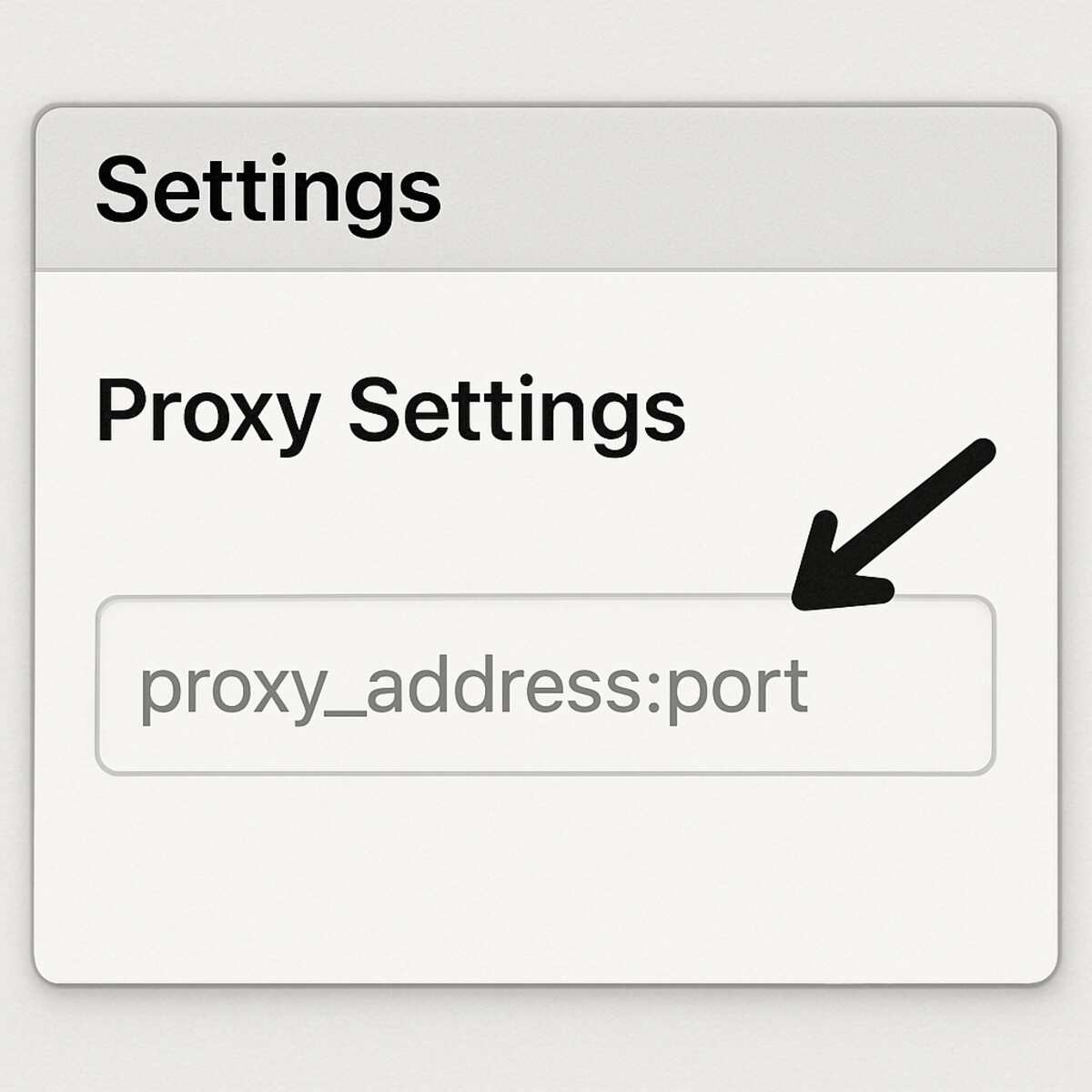
The surprising part is how simple it is to connect your automation software to this network. Once you sign up with a provider, they typically give you a unique address and port—a string of text that acts like a key. Inside your automation bot’s control panel, there will be a settings field, often labeled “Proxy Settings.” You simply copy the key from your provider and paste it into this box. It’s no more complicated than typing a Wi-Fi password into your laptop. The software and the provider handle all the heavy lifting of rotating addresses and routing your requests.
In essence, the truly difficult part of managing a huge pool of proxies is outsourced. This makes powerful automation far more accessible than most people realize. You don’t need to be a technical genius to get a bot up and running with a thousand different identities. This accessibility, however, raises a critical question about how these tools are used.
Using These Powers for Good: A Note on Ethical Automation
With the ability to deploy countless automated workers, it’s easy to see this technology in a negative light—sneaker bots and ticket scalpers immediately come to mind. But the world of automation isn’t just a digital wild west. Many bots are essential for the internet to function, like the ones Google uses to discover new websites for its search results. The key difference lies in the user’s intent. Using proxies for automation carries a responsibility to act like a respectful guest rather than a disruptive intruder.
Most websites offer a public guide specifically for automated programs. It’s a simple text file, often called robots.txt, that acts like a welcome sign at the entrance of a public library. This sign might say, “Everyone is free to browse the main shelves, but please don’t enter the staff-only archives or check out a hundred books at once.” Similarly, a website’s robots.txt file tells bots which pages are okay to visit for data gathering and which should be left alone, establishing a clear code of conduct.
This brings us to the core of responsible behavior: ethical web scraping with proxies. A “good bot” respects the robots.txt file and is programmed to make requests at a reasonable pace so it doesn’t overload the website’s servers. In contrast, a “bad bot” ignores these rules, using its proxies to hammer a site with requests or access forbidden areas. A proxy is just a tool. Its ethical use depends entirely on whether it’s enabling polite, efficient access or being used to forcefully break down the door.
The Internet’s Hidden Layer Revealed
The next time you see limited-edition sneakers sell out in a second or watch flight prices shift in the blink of an eye, it will no longer feel like magic. Where there was once a frustrating mystery, the invisible machinery is now visible. The digital “return address” of an IP, the speed of automated bots, and the digital walls websites build to stop them are all clear.
The key to bypassing those walls is the digital middleman—the automation proxy server. It is a tool that gives a bot an army of disguises. By using proxies, a single script can appear as hundreds or thousands of different people, making each request seem perfectly normal. The bot avoids the block, and the task gets done.
More than that, the strategy involved is now apparent. Some proxies come from data centers while others look like they’re from a real home, and that difference is crucial. This is the first step in understanding the logic behind choosing the right proxies for automation, whether the goal is to appear as a crowd of shoppers or a single, consistent user.
Clarity has replaced confusion. From now on, the subtle signs of this constant digital dance—the captchas, the regional content blocks, the dynamic pricing—will be recognizable. This isn’t just technical knowledge; it’s a new lens through which to view the modern internet, transforming you from a passive user into an informed observer.